First things first: from the last blog it seems we all want to live in Torc Avenue! Several folks thought we should have more artefact themed roads, which I couldn’t agree with more. Anyone know of any others?
But back to the torcs and this time I have an apology to make: I assumed that the Middleton Hall torc was found in Staffordshire, when it turns out Middleton Hall is actually just within Warwickshire: sorry to the Warks folks for sending their torc to another county!
But this does make an interesting point about times past: the Iron Age folks wouldn’t have known about counties, or even countries for that matter. They’d have perhaps defined themselves by their local communities, families and relationships with other groups they married into, traded with, or had ancestral bonds with – but it does not appear to be a strict tribal or clan system of the type we’d see in later periods of history in places like Scotland, for example.
We do often talk about ‘tribes’ in the Iron Age but the names of these supposed tribes really only come from Roman descriptions, or the later Roman Civitates town regions (which are assumed to have been based on earlier Iron Age boundaries). However, although there are rough ranges for certain types of coins that appear to have been introduced by distinct social groups, the majority of Iron Age find types – such as pottery and metalwork – do not appear to be found in distinctive regional areas.
It is therefore likely that whatever the social arrangements in the Iron Age, there was a degree of flexibility with these groupings and with the relationships they had with others who lived in these islands. Torcs certainly do not fit with tribal boundaries (see, for example, torcs being made or finished by the same craftsperson, but found in Nottinghamshire, Peeblesshire and Norfolk. See here for further info). But I digress…
Back to the WARKWICKSHIRE found Middleton Hall torc. From the Historic Environment Record it would appear that this torc was found during potato harvesting in 1968 or 1969. First off, I’m wondering why we have no absolute date for the finding: my best guess would be that, like Glascote, it wasn’t recognised as a torc at the time and was therefore not immediately declared. This would be supported by the British Museum catalogue entry which says that the torc was not acquired until 1977.
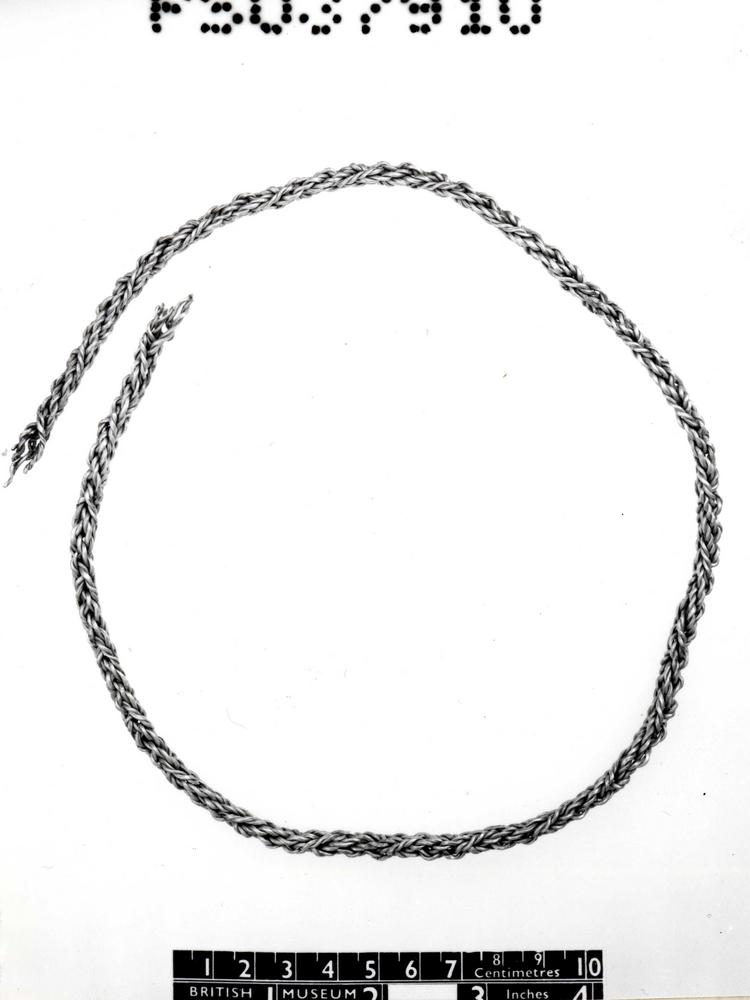
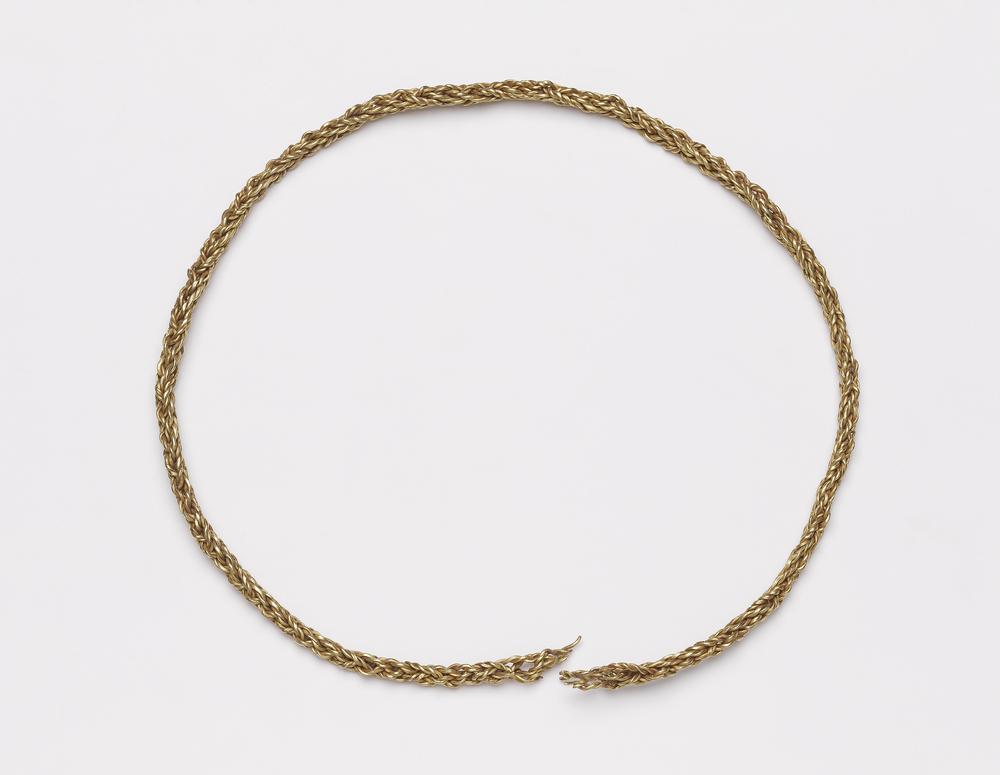
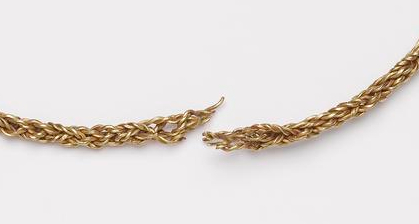
We’ve only got three photos of this torc, from the British Museum, and at first glance it’s a little underwhelming. It’s clearly not complete. However, up close it’s rather clever: 12 wires (again I’d want to check this in real life) twisted into 6 pairs, which have then been wound together.
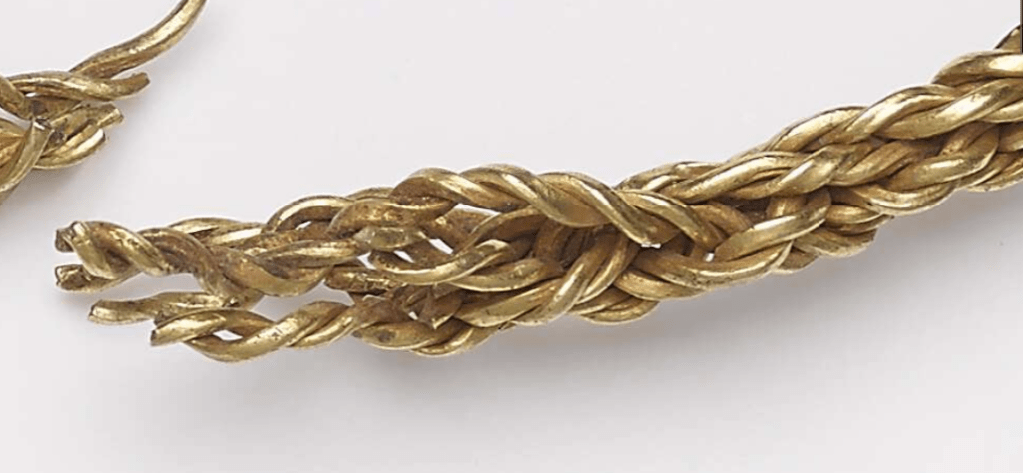
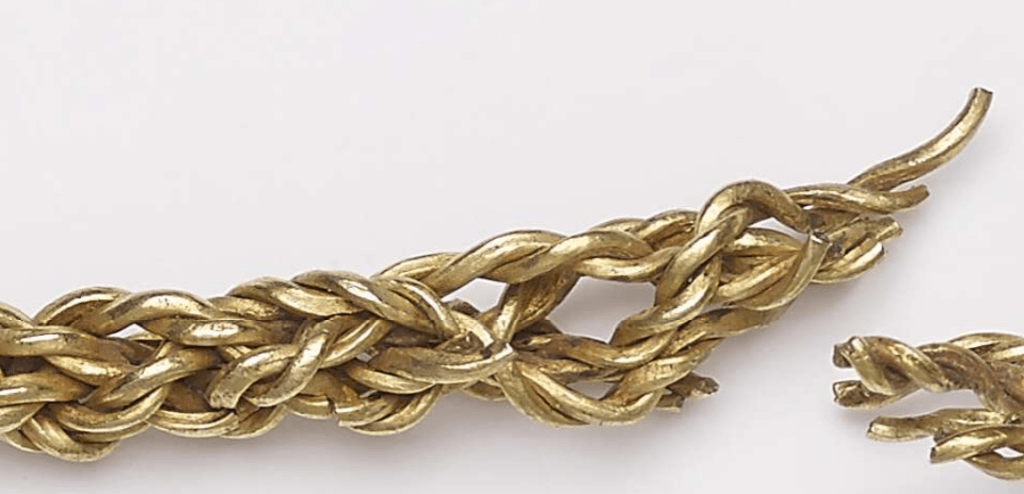
The British Museum catalogue suggests that the pairs of wires have been plaited – rather than twisted – together which seems likely. A close up look will tell. But whatever the case, this wire neck ring has been carefully achieved and with skill: despite appearances, getting an even twist on gold wires is not straightforward: the gold ‘work hardens’ with each twist and even with wires of around 1mm thick, they go stiff quickly and want to warp, rather than sit correctly and so need to be regularly annealed (heated and cooled). So yes, even something apparently this simple really isn’t unless you know that you’re doing… Iron Age goldsmiths certainly knew what they were doing!
Initial thoughts:
- This reminds me of another torc collection, from Clevedon in Somerset, which comprised a torc terminal and separate, apparently unconnected, piece of neck ring. The Clevedon neck ring is, however, different as the paired twists have been twisted together, rather than plaited.
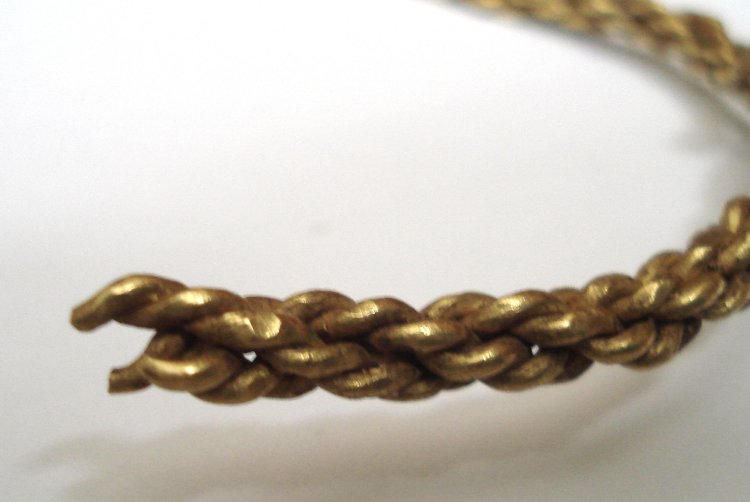
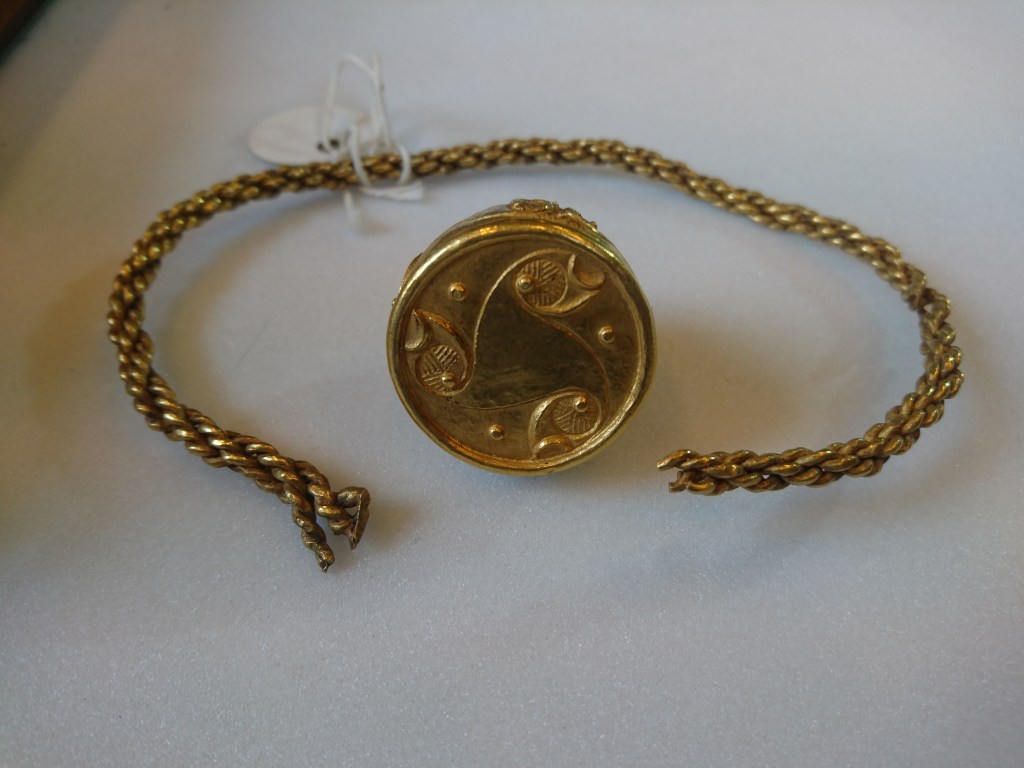
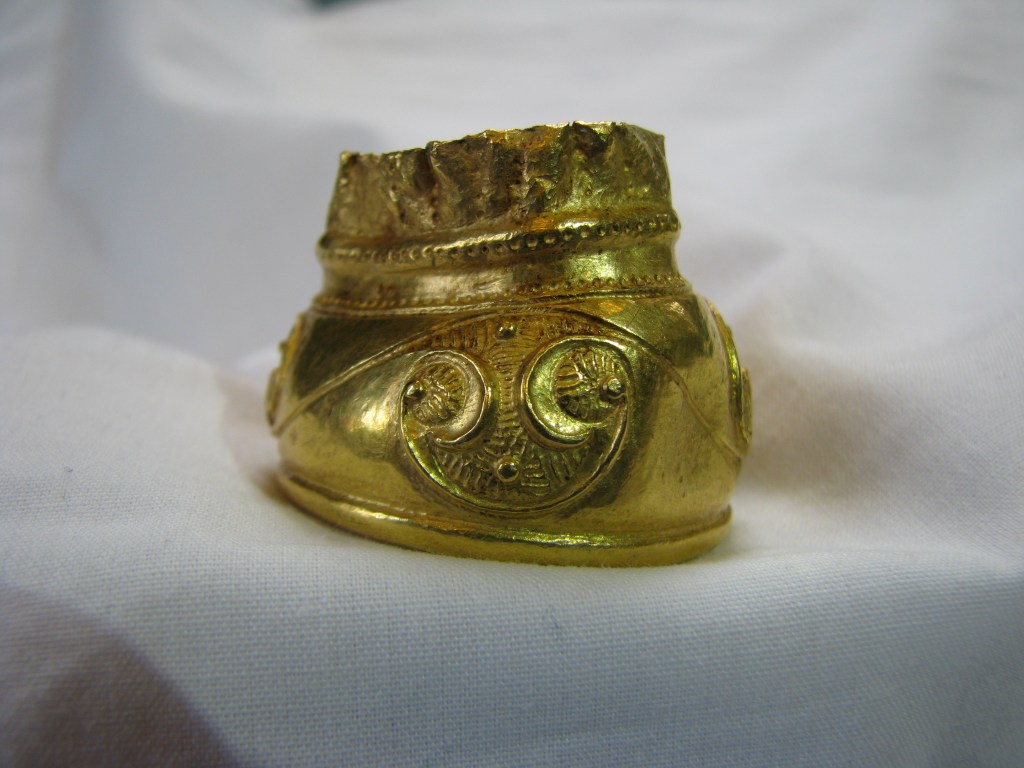
- I’m also thinking of the neck ring of a rather unusual wire torc from Blair Drummond in Scotland, which has a not dissimilar plaited neck ring: the width of that neck ring being not too far off the same as Middleton Hall. As such, has the Middleton Hall torc only lost it’s terminals, rather than being a smaller broken part of a bigger multi-strand torc? And could the Blair Drummond and Middleton Hall torcs be related?
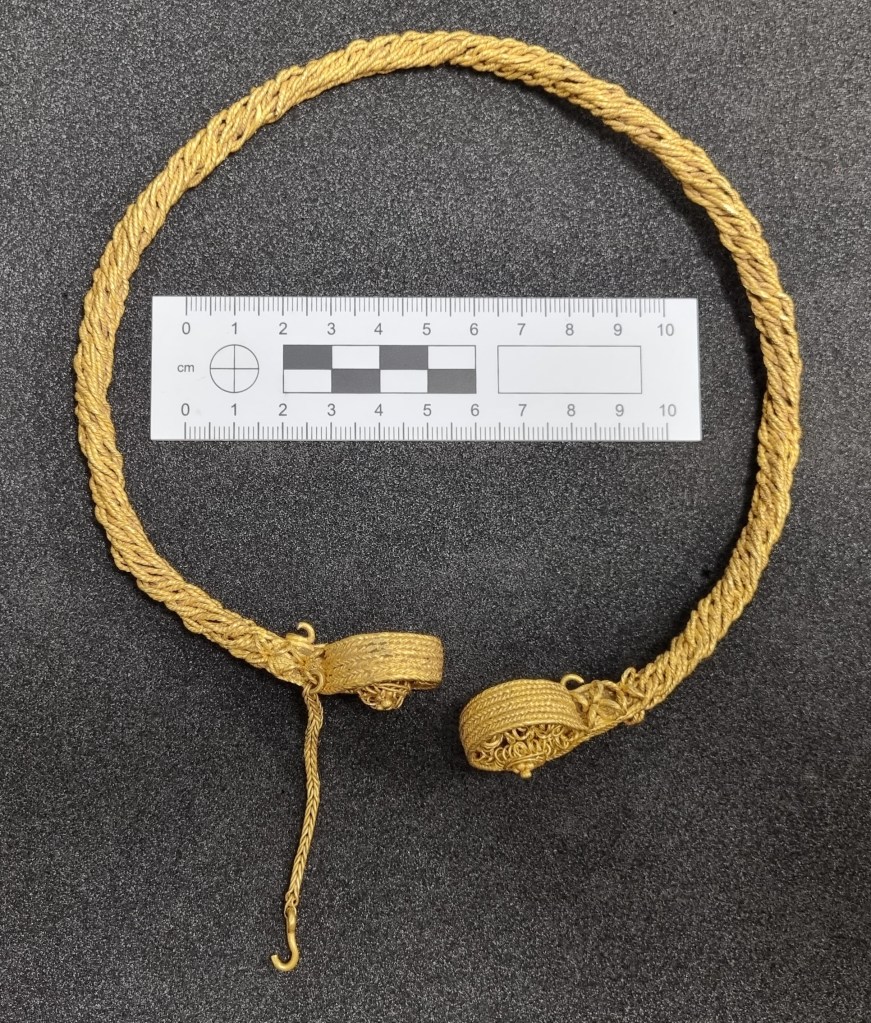
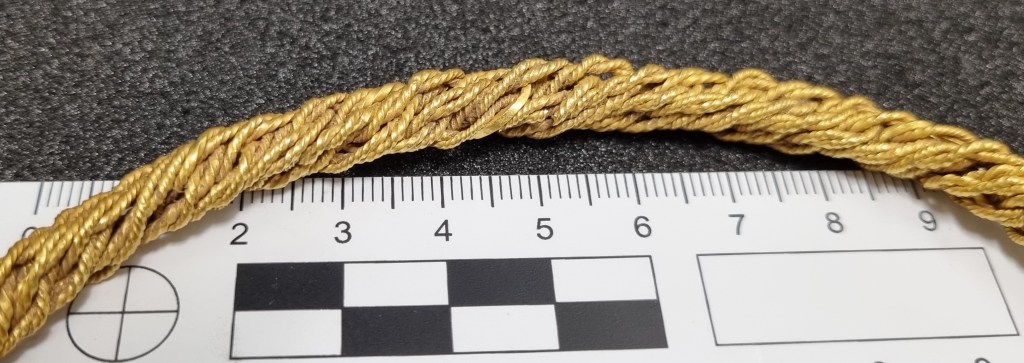
- There’s also a visual similarity to the Alrewas bundle, in the way that the torcs have been apparently ‘taken out of use’ before deposition.
- I also wonder if the torc was found in this shape, or whether it was formed back into a torc neck ring after finding? If we knew this (we probably never will) it would help us to know if the torc really was ‘taken out of use’ or was still seen as a functional torc, even though clearly one with scratty ends!
- It’s also possible that this neck ring could be a stage in the torc making process, that was abandoned. The ragged ends would suggest this is less likely, but I’d like to get a close up look at those ends: there’s always clues there.
Anyway, enough of my blether. Next up will be one of the prettiest torcs ever found in these islands: The Needwood Forest torc.
In the meantime, do get in touch or say ‘hello’ on social media and if you want to be notified each time there’s a new post, do click on ‘Subscribe’ below.
Until next time, torc fanciers!
 The Big Book of Torcs
2 Replies to “The Staffordshire Torc Odyssey: 5 Middleton Hall”