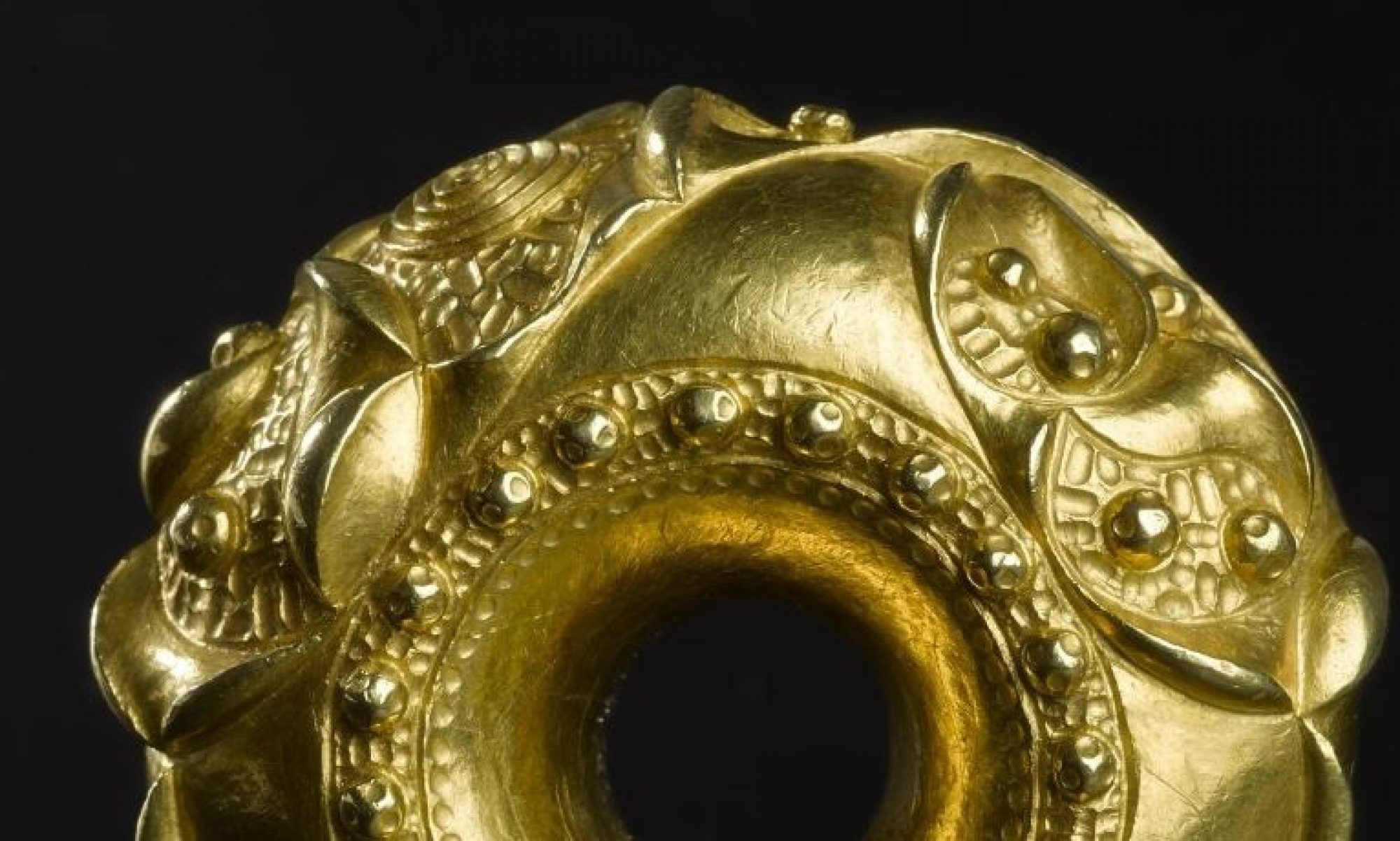
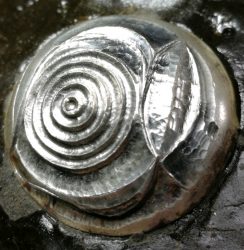
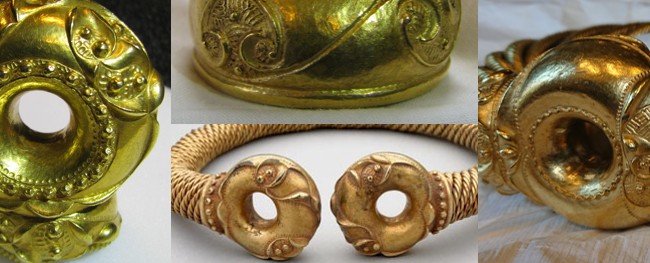
As people often ask me about torcs, I thought it might be useful to answer some of the most frequently asked questions.
If there’s anything you want to ask, that isn’t here, then please get in touch, and I’ll update this page with any new questions as and when they arise. But please remember, no researcher ever knows everything. Indeed, thanks to the multiple millennia that have passed since the Iron Age, we can never know all the answers, nor likely ever will, and – as we gain new evidence and/or new analytical techniques are developed – the picture is constantly evolving. However, I’ll try and give you answers that I think best fit the evidence and what we currently know about Iron Age torcs from these islands.
It should also be noted that this is a very brief overview: as with everything the complicated detail is beyond the scope of a quick introduction, but I hope the following will at least give an idea of what torcs are and aren’t. So to start, what exactly is a torc?
What is a torc?
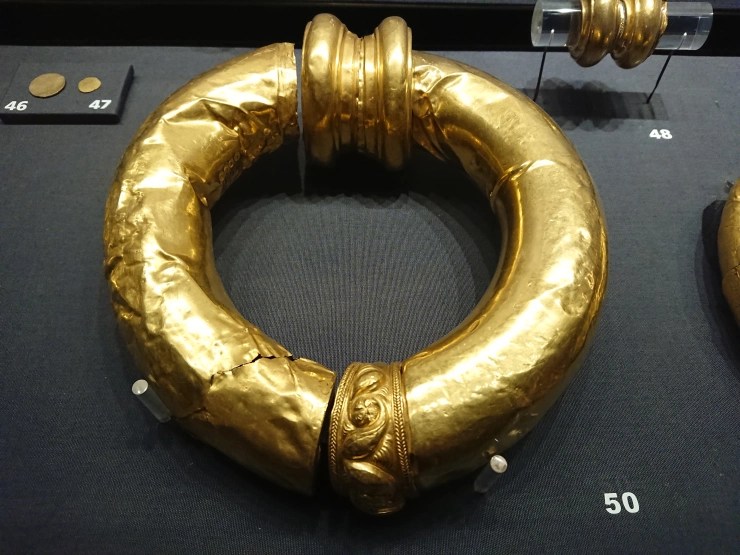
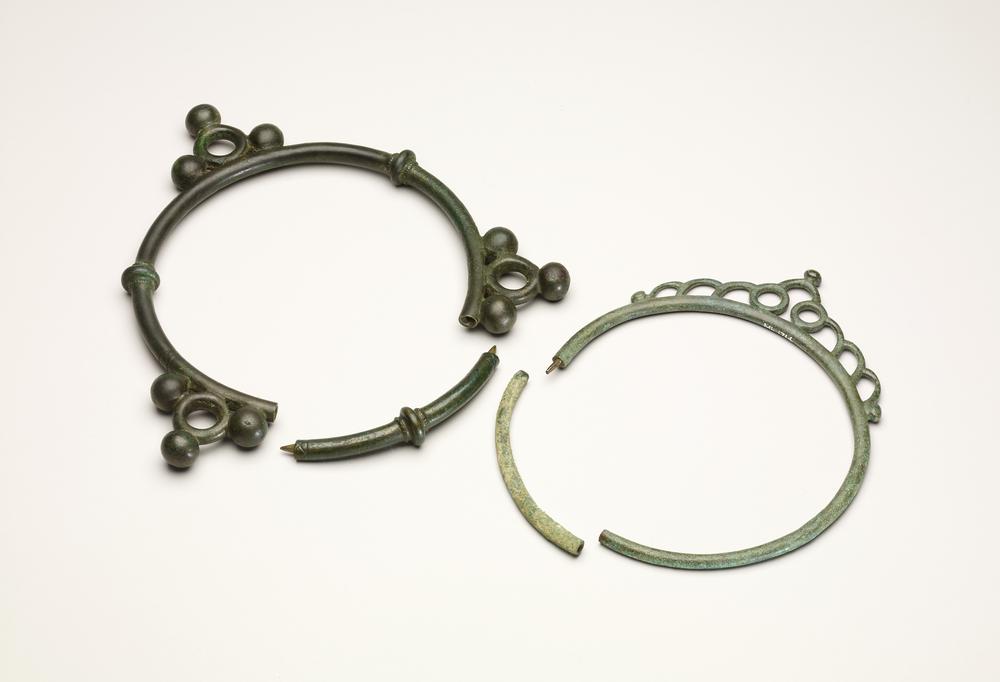
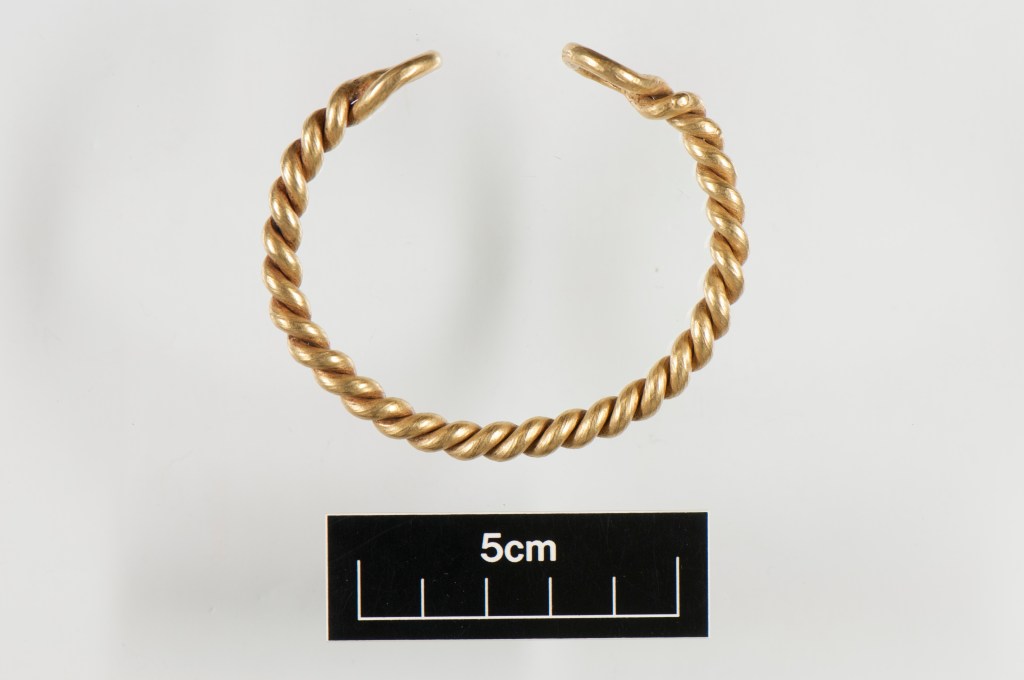
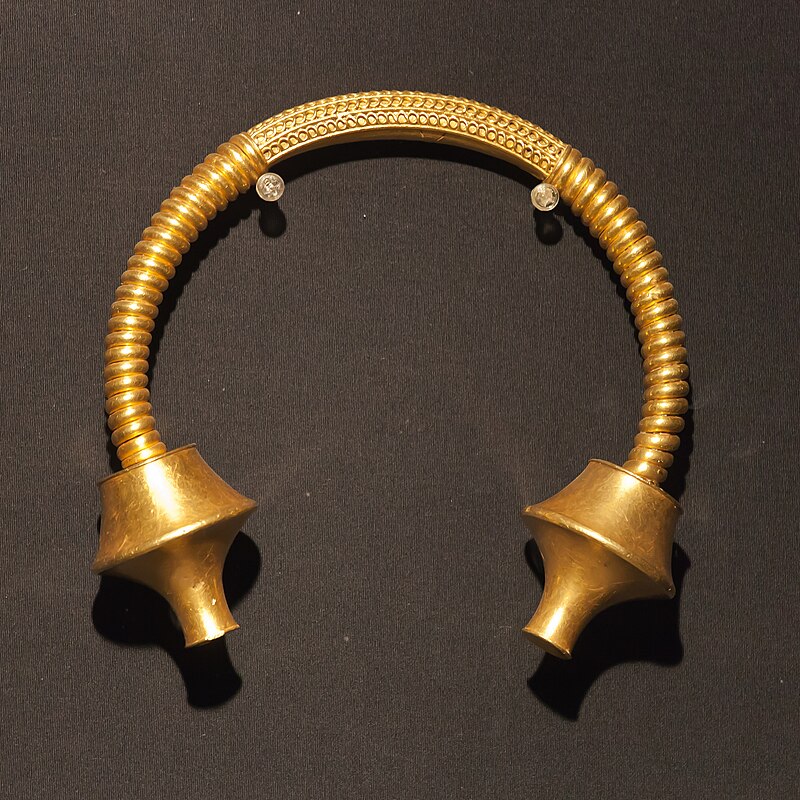
A torc is a neck ring, but can also be arm ring sized. Most often in Britain and Ireland torcs are penannular (c-shaped) in form and have an opening with two, often decorated, terminals. However, we also have tubular torcs which, when worn, would appear to have had no opening (they kind of hinge open) and, on the continent of Europe, there are many torcs which look to be a complete circle, but which have sections which pop out to allow the torc to be put on.
The word ‘torc’ (or sometimes ‘torque’ in earlier usage) comes from the Latin ‘torqueo’ and means ‘to twist’. However, although many torcs do have a neck ring made from twisted wires/rods, a lot don’t, so it’s a bit misleading!
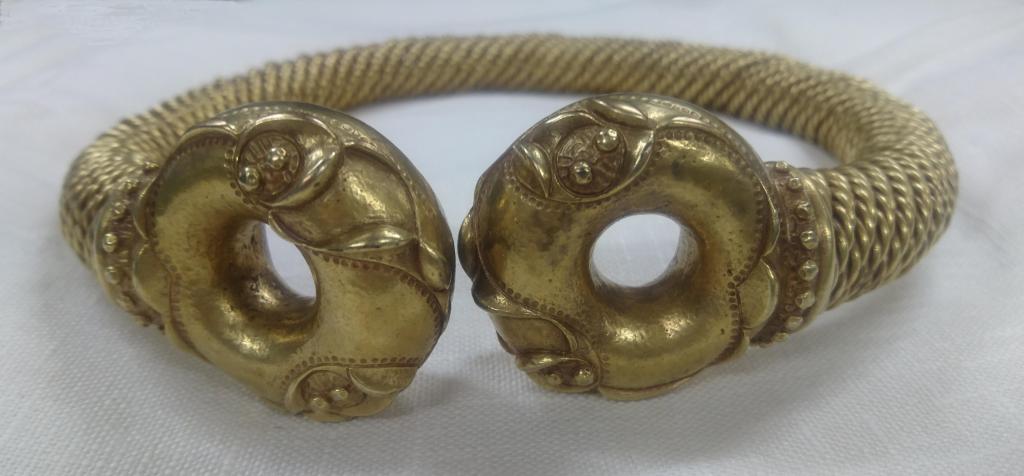
How old are torcs?
This website looks at the torcs that were made and/or deposited in Iron Age Britain and Ireland from around 400BC to the time of Roman influence in these islands from about the first century BC to the later 1st century AD. I am always very careful to say ‘the time of Roman influence’ because although torcs were made, and worn, by ‘the Romans/Romanised peoples’, the torcs that are the subject of this website are very much an Iron Age phenomenon which appears to have disappeared abruptly in the first century AD as Roman influence/fashions/political control gained precedence.
However, despite the plethora of Iron Age types, torcs have a much longer – and also a more recent – history, with the first use of the word ‘torc/torque’ in archaeology often being used to describe, not only torcs of the Iron Age, but also the twisted bar torcs of the middle to late Bronze Age, dating from around 1400-800BC.
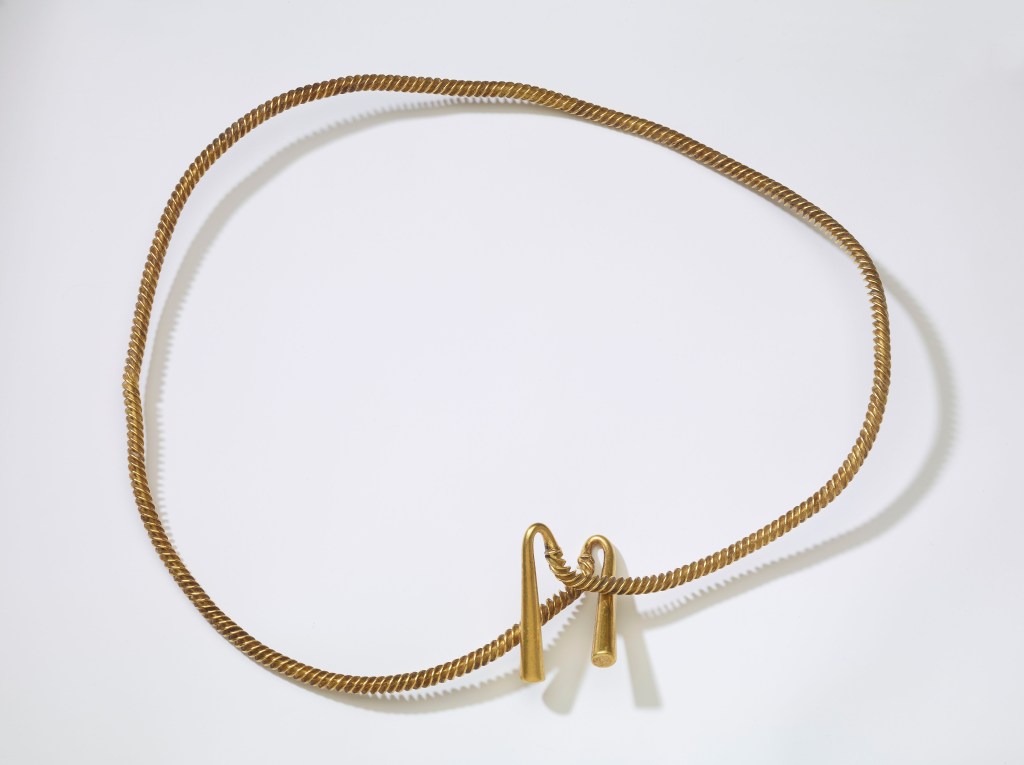
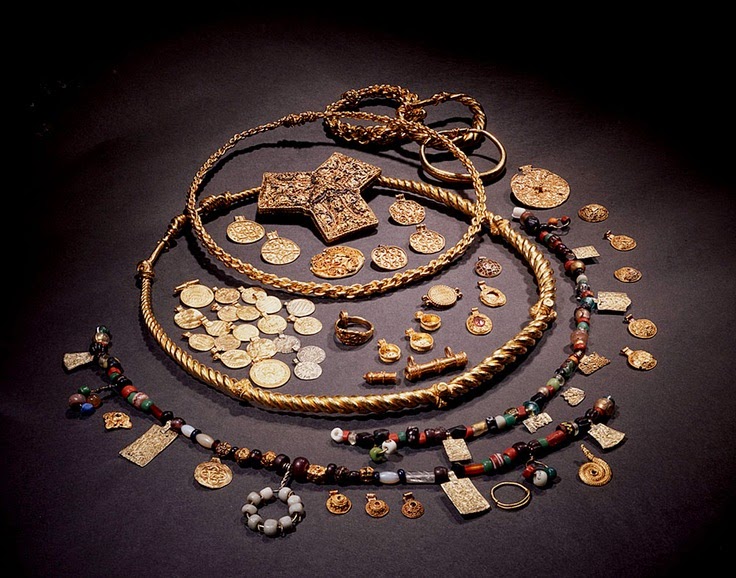
Following on from the Iron Age proper, in the time of Roman influence and the invasion of Britain, torcs continued in use, with new forms such as beaded torcs being found in the north and west of Britain, hinged ‘Wraxall’ collars in the south west and simpler rod, ‘Baldock’, types from the south from around the time of conquest into the later 2nd century AD. In later periods, and across Europe, rings/neck rings (torcs in all but name) can also be found in the early medieval period and beyond.
Where are torcs found?
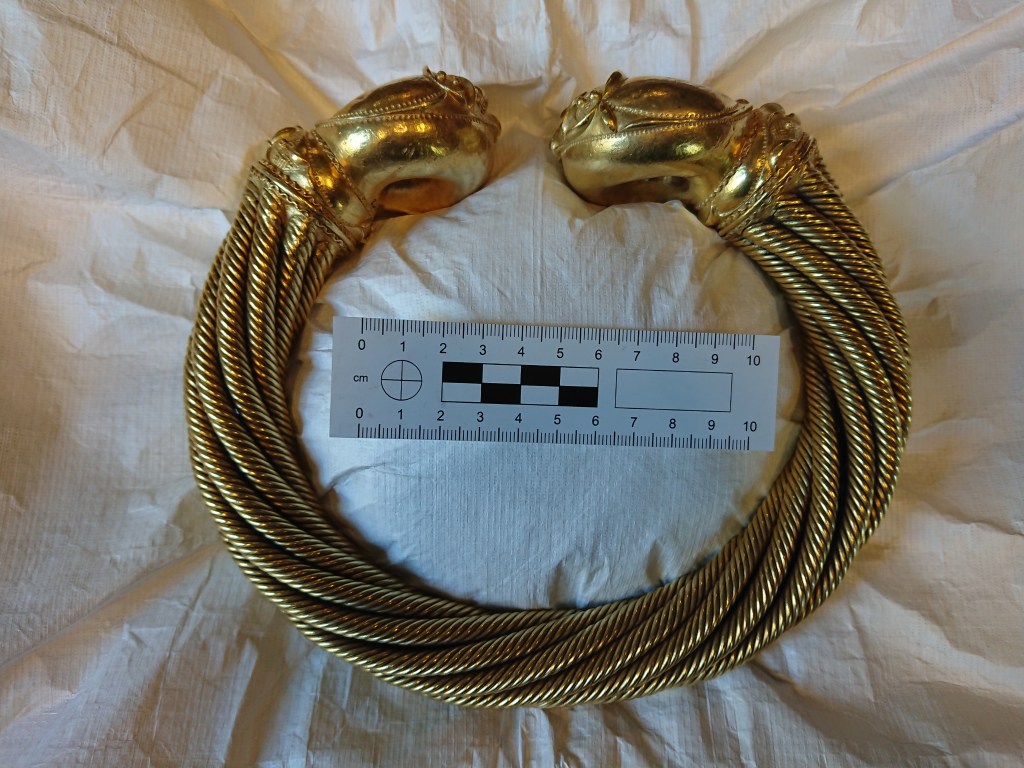
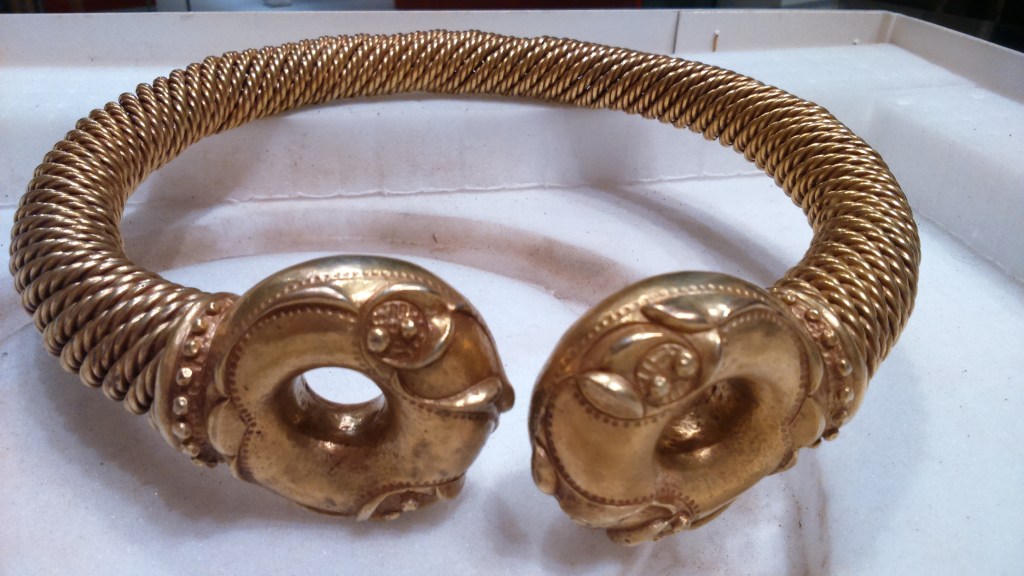
Iron Age torcs are found all over Europe, from the east in the Scythian heartlands to the west in Ireland. In Britain and Ireland, it would appear that torc making was often very insular, with torus torcs (those with donut shaped terminals, like the Snettisham Great torc) being unknown elsewhere in Europe.
Torcs appear to have been popular in Britain and Ireland, with finds of whole torcs/pieces of torcs – representing upwards of 400 torcs – having been made here. However, it should be noted that the majority of torc finds are down to metal detecting, which is legal – and hugely popular – in the UK, but which is often a restricted activity in other parts of Europe. As such the apparently high numbers from the UK may not be a reliable indicator of a love of all things torc in the British Iron Age but not elsewhere!
What are torcs made of?
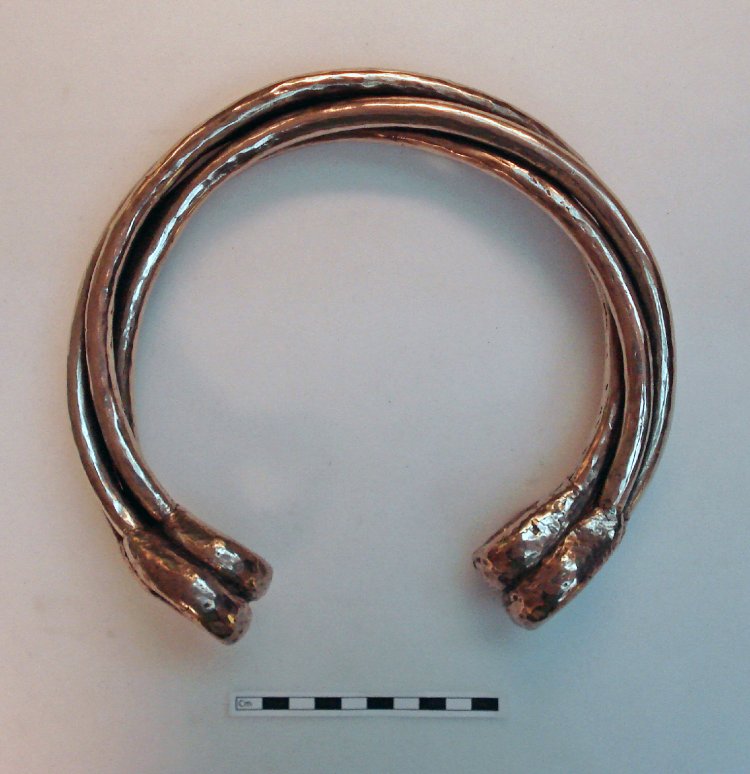
Iron Age torcs can be made of manufactured gold, silver or copper alloys and are often made from what’s called ternary alloys, which include all three metals in differing proportions. There are also a couple of iron and lead ones. Torcs (usually the earlier Iron Age ones) can also be made from a naturally occurring alloy called electrum, which is a mix of gold and silver. In addition to the above, several copper alloy torcs from Snettisham, East Anglia, were also gilded with a mercury and gold paste which, when heated, would leave a layer of gold on the torc surface, making it appear solid gold.
We should also consider that there may have been torcs made of materials such as wood, leather or yarn. With many of the designs of torcs echoing the twists and plaits seen in multistrand yarns and weaving, although no organic torcs have been found, it would not surprise me if examples of organic torcs were to be discovered at some point. Such organic material torcs would often not be preserved into the present day and so we may be missing a whole group of commonly worn torcs made from easily acquired materials.
Where does the material to make torcs come from?
The short answer to this is we aren’t sure. It is likely that many torcs were made from recycled gold, silver and copper alloy objects in the latest Iron Age, but earlier in the period there is evidence that some gold torcs were made from naturally occurring gold alloys (electrum).
It is also possible that the later torcs mixed recycled objects and metals from natural sources. The work has yet to be done to show where the natural gold alloys might have come from, but it is entirely possible that mined gold, or gold collected from rivers/streams (alluvial gold) in the UK, was used. It is also possible that some metal was imported. However, we don’t yet have the compositional analysis to be certain. If you want to read a bit more about gold alloys, you can find more here.
How big are torcs?
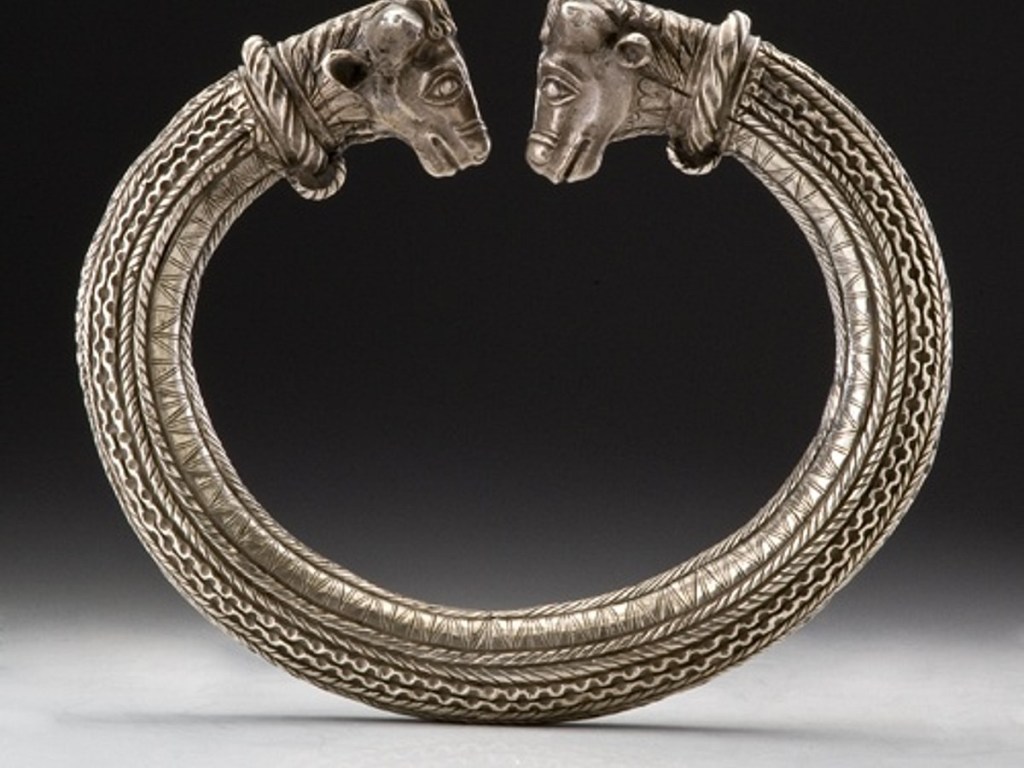
Torcs can be found in many sizes from the small, likely bracelet/arm or child-neck sized rings of, for example, the 70mm internal diameter Towton torcs, through the 145mm internal diameter, adult neck sized, Snettisham Great torc, and on to the bigger 180mm internal diameter torc G11 from Snettisham. At the absolute extreme, the huge, 6.7kg Trichtingen silver and iron cored torc from Germany has a diameter of 295mm!
Who wore torcs?
The TLDR is that we just don’t know! In the earlier Iron Age, feminine burials wearing torcs such as that found in Vix in France, would suggest that they were a female adornment, whereas slightly later, the male, torc wearing, burial of Glauberg in Germany might suggest a masculine role. In Britain and Ireland, the written account by Cassius Dio of Boudica wearing a large gold necklace/neck ring/torc, might suggest that in these islands and at this date, torcs were feminine wear but, from the above, it is likely that those who wore torcs changed with time and location. We also don’t know whether torcs were also worn by children as well as adults: some of the smaller sizes might suggest wear by youngsters, but this is uncertain.
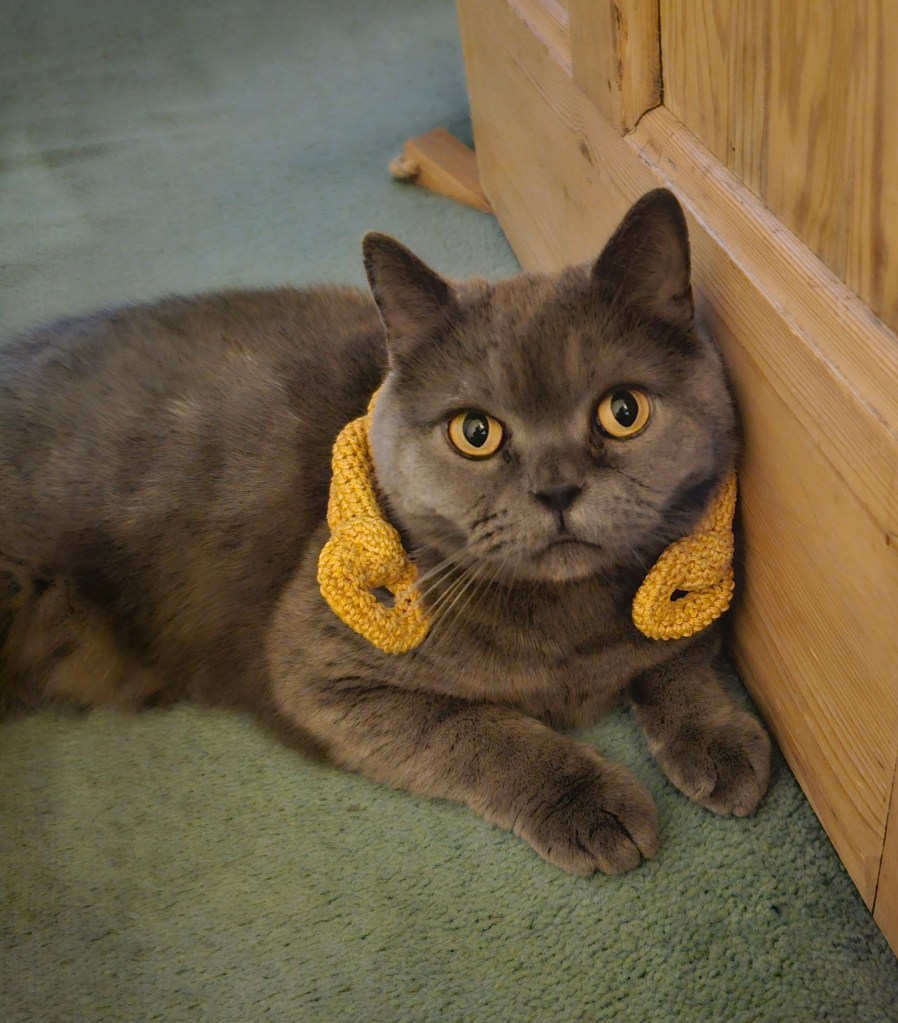
It should also be said that we’re pretty certain they weren’t worn by cats!!
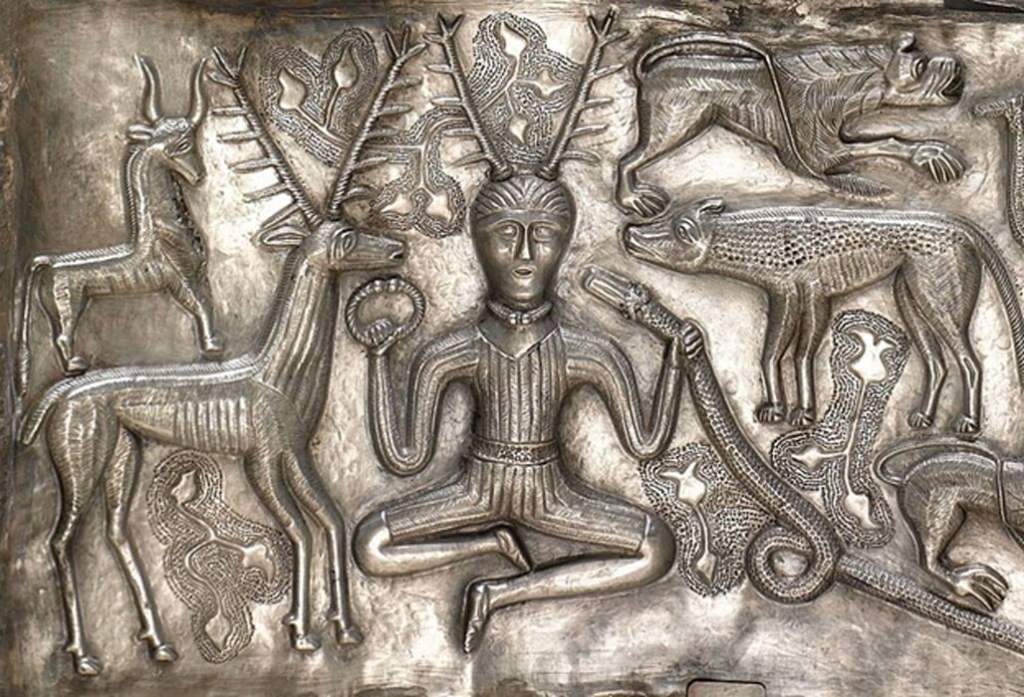
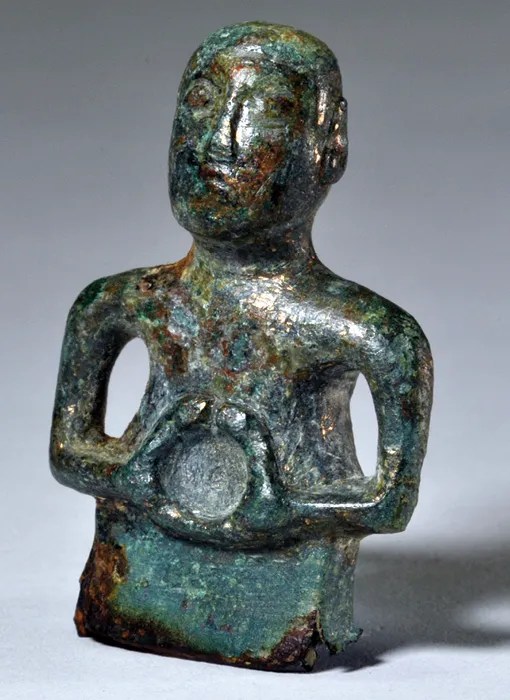
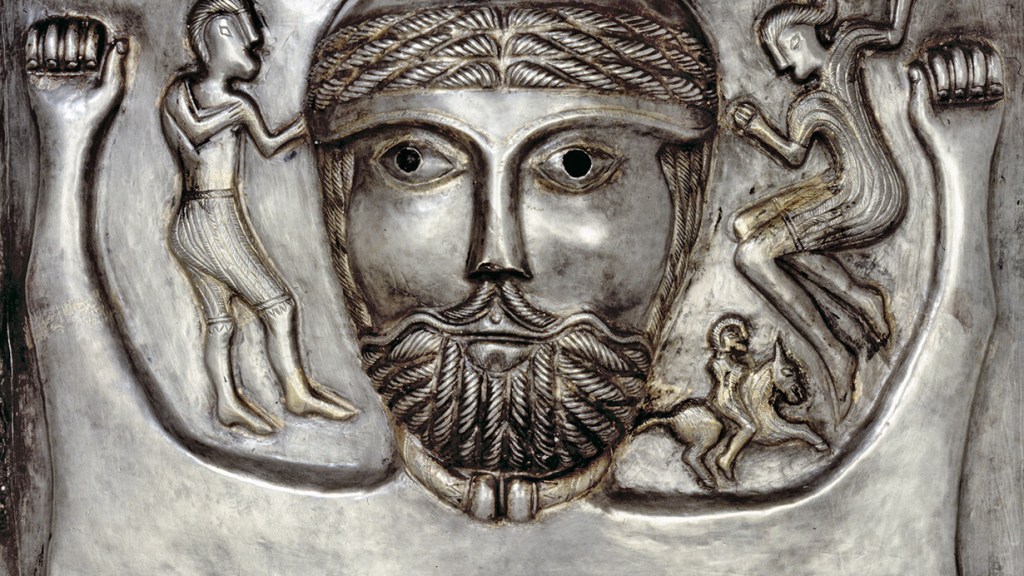
It is also clear that some torcs were never designed to be worn, with the huge Trichtingen torc likely to have been too heavy to wear and assumed to have been fitted to a wooden idol. Towards the latest Iron Age, and into the Roman period, torcs are also often shown in iconography as being held in the hands (see for example the Gundestrup cauldron from Denmark or the Wimpole figure from Cambridgeshire).
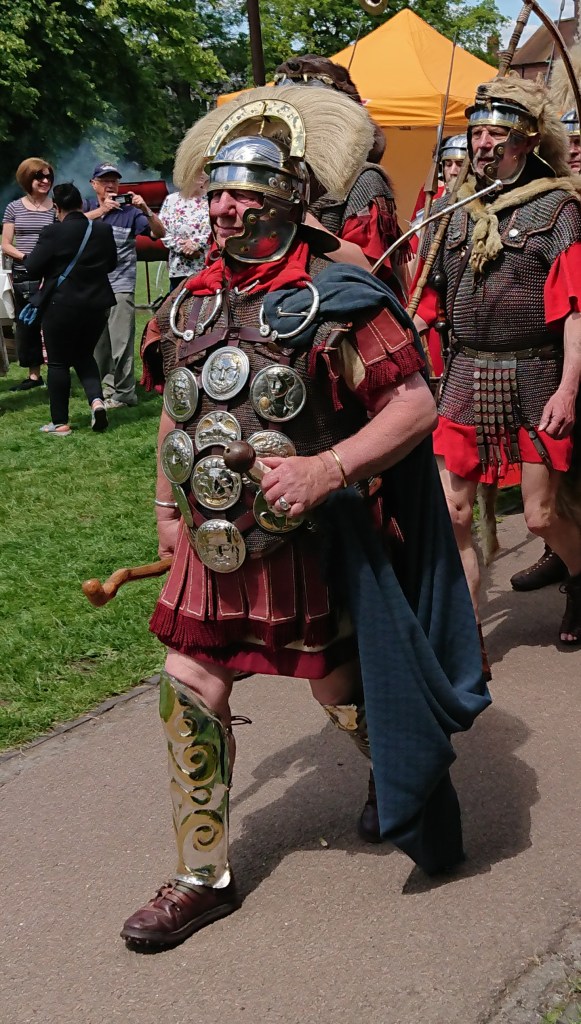
I’ve often wondered if this has some kind of symbolic meaning: the torc being held showing some kind of power over the conquered peoples of the Iron Age. This is very much the case for the torcs worn on the chests of the soldiers of the Roman army, so isn’t such a far fetched idea…
Whatever the case, it is clear that torcs, especially the gold alloy ones, are prestige items which convey meaning and symbolism. However, we do not know whether the torcs were a symbol of the importance of an individual, community or group.
It would appear, from sites like Snettisham, that some torcs – such as the Grotesque torc – were several hundred years old when they were buried. This would suggest that torcs were curated/kept/stored for long periods of time and, as utterly unique items, it is not difficult to suggest that perhaps they were relics of known individuals, or peoples, and had stories attached to their making and lifetimes.
My feeling is – and this is something I’m working on at the moment – that torcs were very tangible evidence of ancestral lineages, carefully kept, handed down and referred to. A kind of visible history of your family or group going back hundreds of years…but more of that to come in due course!
How do you wear a torc?
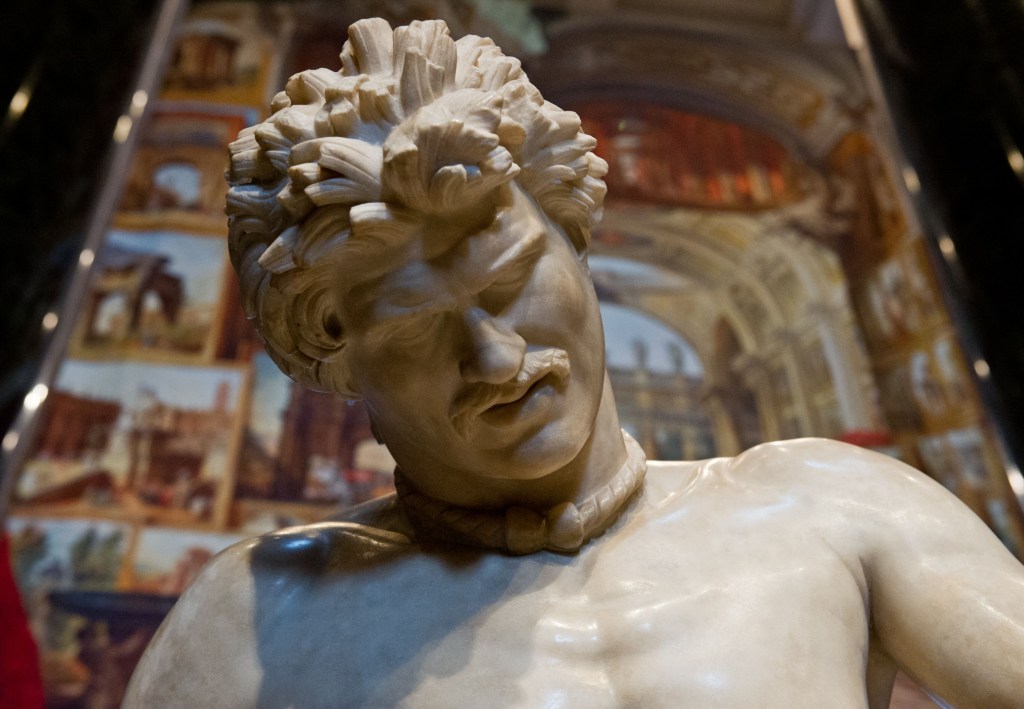
From statues like the Dying Gaul, or from representations on items such as the Gundestrup cauldron, it would appear that torcs were worn with the opening at the front. With often highly decorated terminals, this seems a reasonable assumption. There is also wear on one side of the terminals of several torcs, suggesting they were regularly worn with the terminals resting on the collar bones.
However, several European torcs, like the Burela torc from Spain, are decorated on the rear of the neck ring, which might suggest a different manner of wearing. However, all these torcs also have decorated terminals, so are we perhaps looking at a continental fashion for wearing the hair short, or up, or perhaps this is evidence of the detail of some torcs being known only to the wearer, but hidden from view otherwise? Could it also suggest that these torcs weren’t just worn, but were also displayed – when not being worn – to be admired?
How do you put on a torc?
Penannular torcs are not actually that difficult to put on – despite the gap between the terminals looking narrow, it’s actually easy to manoeuvre a torc onto your neck as most of your neck is fleshy and so the gap in the torc doesn’t need to be that wide. Despite it being commonly assumed that you have to move the terminals apart to put it on, there’s no real need to have to do this.
It’s especially easy to put on the torcs with coiled neck rings, like the Newark torc or Great torc, which actually have remarkably springy neck rings, even after a couple of thousand years!
When on (I’ve tried on replicas), they initially feel cold and heavy, but once you get used to it they don’t feel heavy at all… the bigger ones kinda make you stand up a bit straighter though!!
What were torcs for?
Now this is the million dollar question, and one that we will almost certainly never know the full answer to. My feeling is that they are all about prestige and status that, as collections, they told you – and others – who you were and where you were from. I do not think they were worn all the time, but I do think they were worn sometimes and I do think they were showed off: perhaps your collection of torcs indicated whether you were ‘new money’ or old?
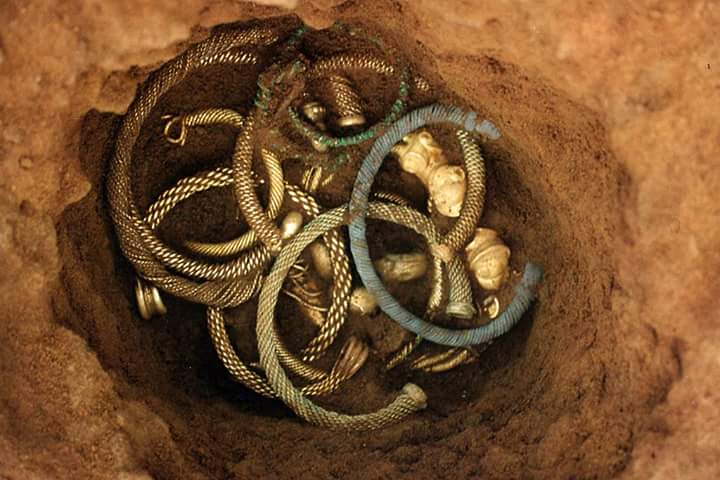
But whatever they once were, what we do know is that, very quickly, perhaps over only a matter of a few years, they were taken out of circulation and buried. Were they now symbols of something best put away? Were they offerings against the incoming Roman changes? Were they sample deposits with the rest of the torcs melted down to be turned into more Romanised coins/artefacts?
My feeling is that, even though they were, after so many years of being looked after, no longer appropriate, they still mattered – the places where they were buried still mattered. Otherwise why not melt them down and turn them into coins or other artefacts? Indeed, at sites like Snettisham, the later cutting of an enclosure ditch around the deposition site, and the erection of a later Romano-Celtic temple would suggest that the Snettisham site, where so many torcs were buried, still had relevance and meaning, some time after their deposition. Although the torcs were gone, they were certainly not forgotten.
Where can I find out more?
Good news, you’ve come to the right place… there is a lot of torc info here on The Big Book of Torcs that you can peruse, for free, whenever you like. A good place to start is in the Iron Age Torcs page of this site, and don’t forget to check out the tab within this section, History of Torus Torcs, which will give you a run down of the history of those donut terminal torcs, like the Snettisham Great torc.
If you want to dive a little deeper, then the Further Reading and Papers, Blogs and Lectures pages will give you plenty to get your teeth into. And talking of teeth, if you want to keep up to date with regular updates, papers, thoughts, etc, then the Blog pages (and drop down, thematically and alphabetically organised A-Z List) will keep you bang up to date with what I’m up to in the world of torcs… and yes, that includes chewed torcs! I have also live-blogged a piece of research into a group of torcs found in Staffordshire: The Staffordshire Torc Odyssey.
I’ve also worked on some torcs that seem to have been reworked and redeposited in the Viking period and a torc from Sussex which seems to have a connection to the infamous psychic investigator, Harry Price. Recently, I have also been writing more about the politics of torcs and other metal objects: who owns them – and the rights to them – and how metal detecting is affecting recovery and research.
Finally, if you want to know about some of the incredibly talented and knowledgeable craftspeople I work with, then please have a look at The Torc Collective.
…and if that’s not enough, if you want to get in touch, or follow my antics on social media, then do have a look at the links here – after all, it’s always good to torc!
Oh, and one small thing: If you’d like to support my work as an unfunded independent researcher, then please buy me a ‘coffee’. Thank you 🙂
 The Big Book of Torcs