Since I wrote the previous blog on Alrewas, there are a few extra things that have come up, so I thought I’d add an extra blog.
Jump rings
Firstly, Samantha Stanley, a jeweller contact from Twitter, usefully pointed out that the thick ring holding the torcs together might have been like a jump ring (a wire ring which is opened and closed without solder etc).
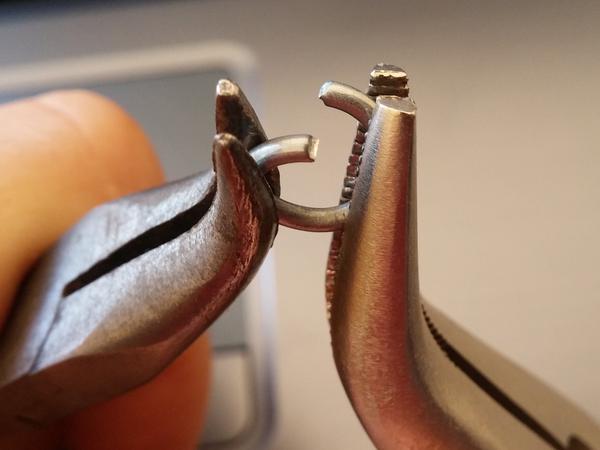
The ring could then have been opened and closed by twisting the two ends apart, (see demonstration HERE) thus stressing the wire less than you would in other ways. This is a great insight and could perhaps explain the torcs lying snugly within the ring: in this scenario, the ring was gently closed over the torcs rather than their having to be threaded through the closed loop, or the wire battered into shape around them. Perfect!
More multi-fold torcs?
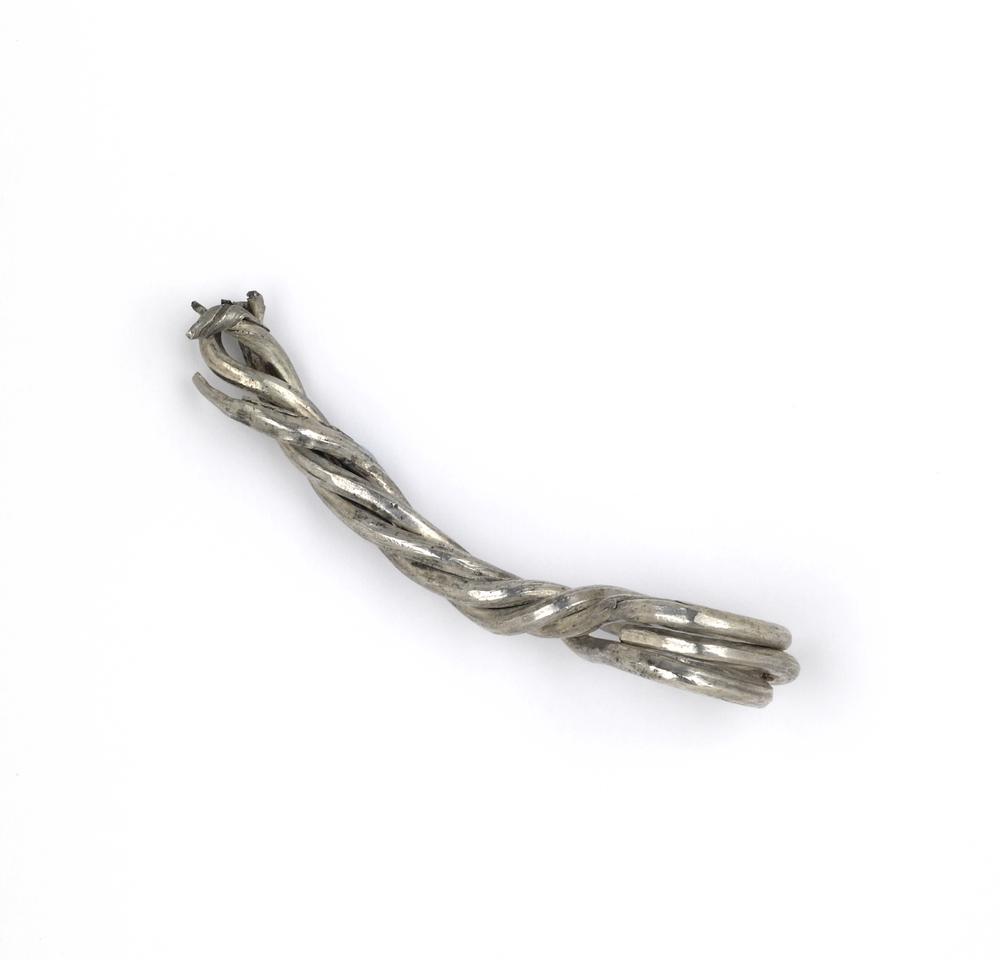
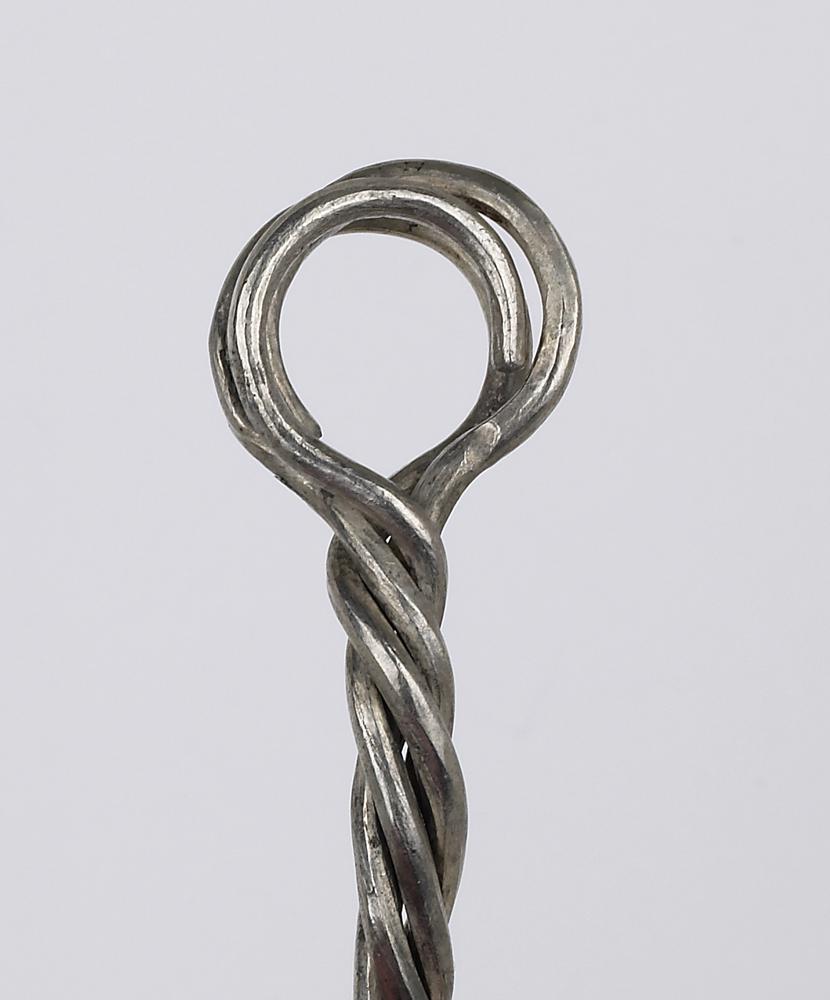
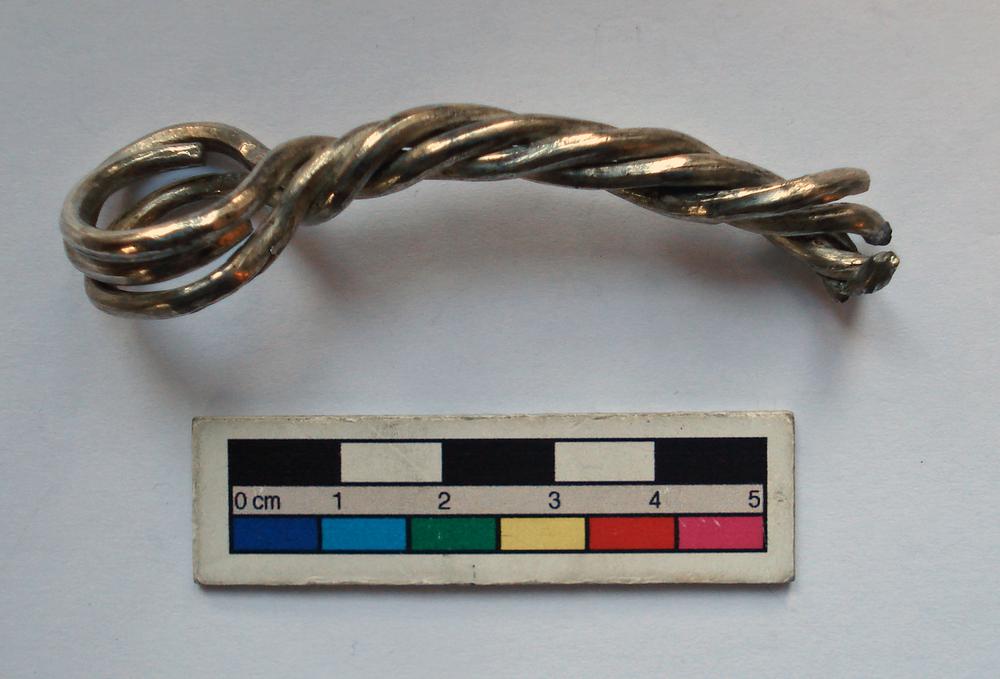
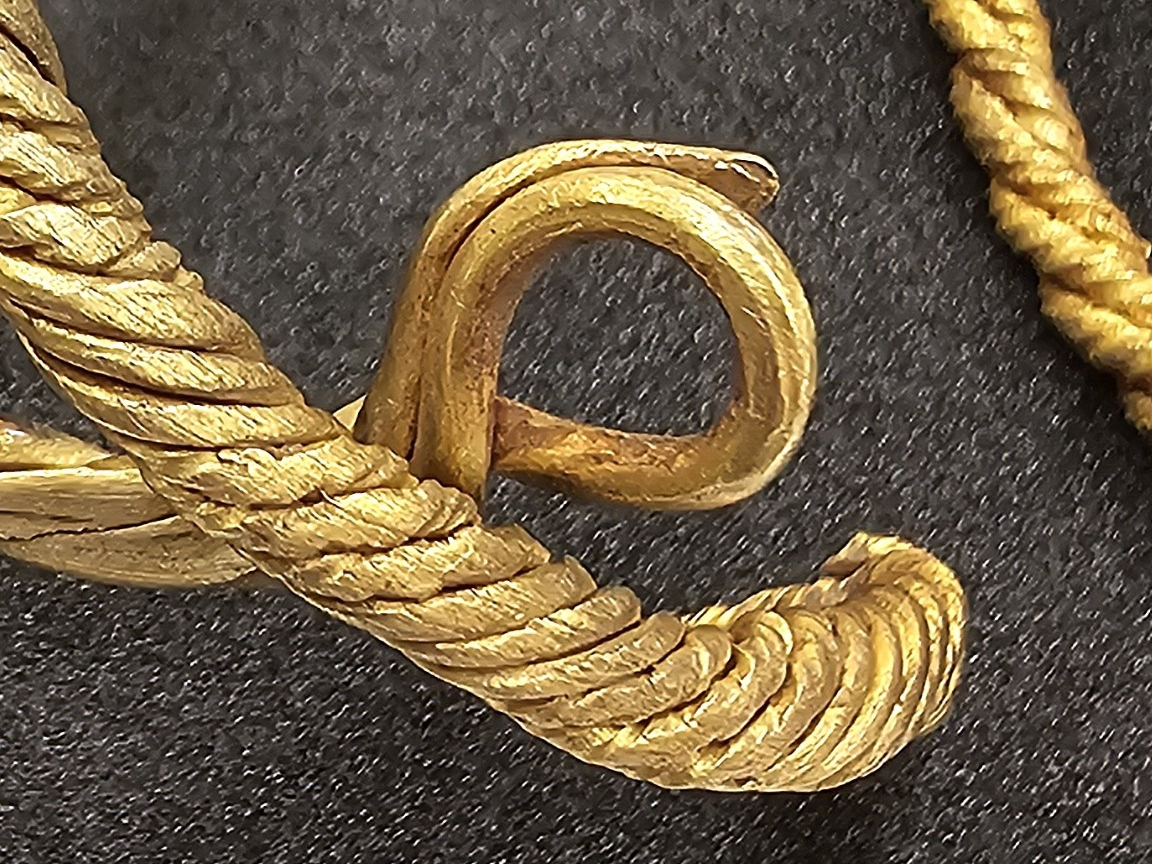
I’ve also been looking through the Snettisham torcs and have found one that could demonstrate the multi-fold wire technique for neck ring making seen in Alrewas torcs B and C. The Snettisham torc 1991,0501.101 has four wires in the neck ring, but has a really unusual ring terminal, with two wire ends present, alongside a single loop. Could this possibly be a ‘W’/’M’ triple fold?

The unfortunate thing about this torc is that it is incomplete and so there is no way of knowing whether the other terminal was a double loop – which would prove the ‘M’/’W’ theory – or whether it was the same as the surviving terminal, which would then allow for the possibility that the wires of the torc neck ring were individual and twisted together, rather than a single, folded, wire which was then twisted. I’m still looking for other examples though, so perhaps there is a complete torc out there somewhere which will hold the answer.
Symbolism?
Another thought that crossed my mind since I saw the Alrewas torcs, is that there may be a symbolic link between the three torcs in the bundle. Torc B is 29cm long, and made from a single length of twisted, square cross-section wire, with a ‘loop and hook’ terminal at each end of the neck ring. The neck ring is c. 3.7mm wide, with wires of c.1.8mm (and some squished 2.8mm ones!). Torc C is 34cm long and is again made from a single length of wire, with ‘loop and hook’ terminals. The neck ring is 4.4-5.5mm thick and made from 2.2-2.8mm thick wires. So, longer and slightly thicker than Torc B, but made in the same way.
Torc F, however, is very different. Made from three plain wires, and three square cross-section wires, its neck ring has been coiled and has a cap terminal. It could be seen that Torc F is a link between both Torcs B and C: three wires like those used in Torc B, three Like Torc C, blended together in Torc F, but with a different terminal type. Could this perhaps mean something about who the torcs were made for or perhaps why they were bundled together? I doubt we will ever know, but certainly worth keeping in mind…
Anyway, that’s enough musing from me. There will probably be a bit of a pause now while I wait to see the next torcs…but, fear not, I will be back!
…and you know the deal: hit ‘Subscribe’ if you want to be kept updated. Until then, thank you for reading!
 The Big Book of Torcs