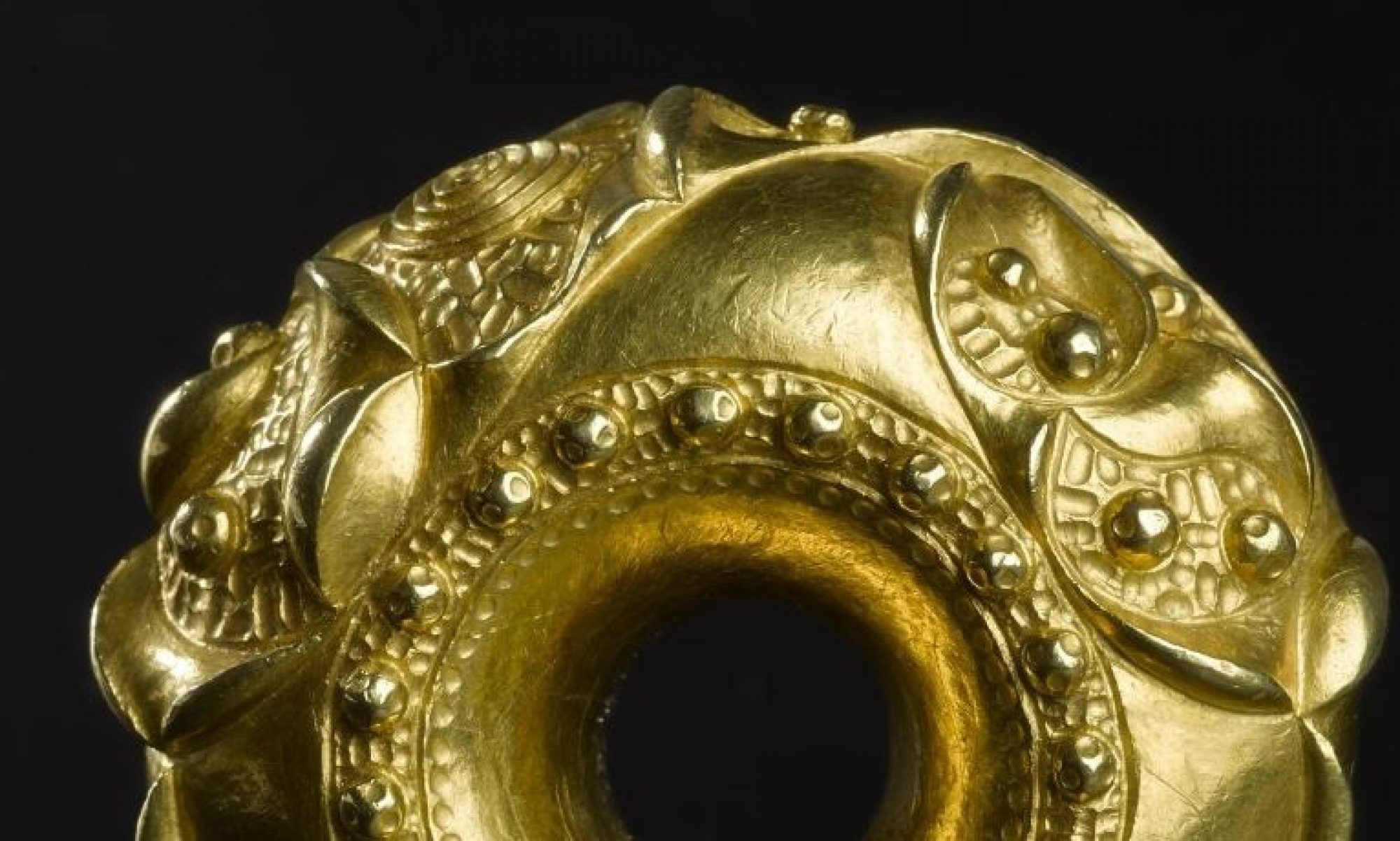
Yesterday we lost a great person. A goldsmith of exceedingly rare talent and knowledge, Ford was generous and kind enough to share his insights and understanding with us. He was a part of The Torc Collective and he helped our research more than he probably ever realised. I will miss him greatly.
I did thank Ford often for all the help he gave us, and I hope he knew how important he was to my research, but nonetheless, I wanted to publicly record – here on The Big Book of Torcs – exactly how much he changed my understanding of gold for the better.

I first heard of Ford in October 2017 when a mutual acquaintance, hearing we were looking for goldsmiths to work with, put me in touch with him. Described to me as “a specialist in the Japanese metalworking tradition”, I had little idea what to expect, but was soon astonished by the videos on Ford’s YouTube channel. I couldn’t wait to speak to him.
Ford understood what we were trying to do, and what we had achieved so far: he, like us, was a skeptic of those ‘who stubbornly cling to notions that have never been subjected to any sort of proper anaylsis’ and who was ‘very happy to help make ripples…or better yet, waves!’.
Ford was a great fit for the small and specialist group of goldsmiths and jewellers we were slowly assembling. He had the deep and wide-ranging knowledge of goldsmithing that both Roland and I lacked, and he also had that amazing quality of someone who truly understood gold, with experience in several goldsmithing traditions. As a master goldsmith in the Japanese tradition, he was used to working without modern tools and equipment. As such, he could get inside the head of the Iron Age goldsmith. Within days, he was onboard and I received a message: ‘oooo bugger, I’m going to have to make a torc terminal! I’m doing experimental reconstructions of a terminal in my mind now’.
I meanwhile had this crazy idea of writing a paper on torcs based on the insights of 21st Century goldsmiths. I wanted it to be narrative, and not overly cluttered with academic references or citations: in short, I wanted the goldsmiths to talk in their own words. However, at that stage the Big Book of Torcs had not been born and I was still very much working within The Academic Tradition and felt if I was not going to have many references, I should at least have quantifiable data. My need to conform led to me compiling a list of questions to ask the goldsmiths we were working with. I would then tally the results and compare and contrast.
Having sent the list to Ford, I received a short message: could I call him at the soonest chance because he just wasn’t sure about this. I did and, after a two hour conversation, realised what a mistake the questionnaire had been: I was trying to corral a group of people who naturally worked outside boundaries, whose artistic natures wanted to talk, rather than answer questions. I immediately scrapped The Questionnaire, and the conversations began in earnest.
The paper that came from these discussions, ‘“Damn Clever Metal Bashers”: the thoughts and insights of 21st century goldsmiths, silversmiths and jewellers regarding Iron Age gold torus torcs’ became one of the most well received papers we have written to date. I am still insanely proud of it: the ideas of so many talented people told in the way they wanted them to be.
Over the next couple of years, Ford and I had messages, emails and calls going back and forth. There was also a large amount of hilarity and putting the world to rights happening during our conversations: talking to Ford was always not just informative, but fun. He was there for us each time someone came up with yet another bonkers idea about Iron Age torcs, always ready with his simple – but educated – explanation of why this ‘armchair idea’ would not work, or could not be done.
By 2018, we had been talking a lot about how the torcs had been decorated, with initial thoughts that the torcs used an internally worked, repoussé, technique, carried out before the compiling of the torc terminal. However, having shown Ford the photos of the interior of the Netherurd and Clevedon terminals, Ford thought he could see the tell-tale evidence of exterior working: the interior orange-peel texture seen on pieces of uchidashi goldworking.

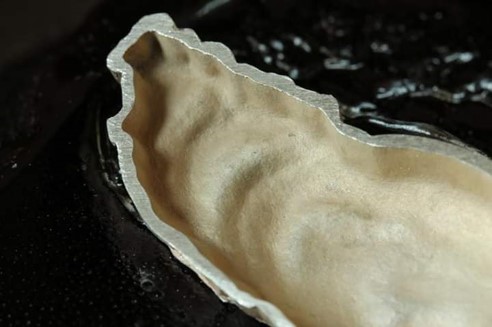
Thanks to this insight – that the torcs had likely been worked from the exterior, with the gold ‘moved around’ with a selection of punches – we now started seeing evidence of this technique everywhere and included the evidence in our papers ‘”Cut and shuts”: The reworking of Iron Age gold torus torcs’ and ‘Investigating the manufacturing technology of later Iron Age torus torcs’. When the Near Stowmarket torc terminal resurfaced in 2019, we could immediately see the orange-peel interior and were able to write more about it.


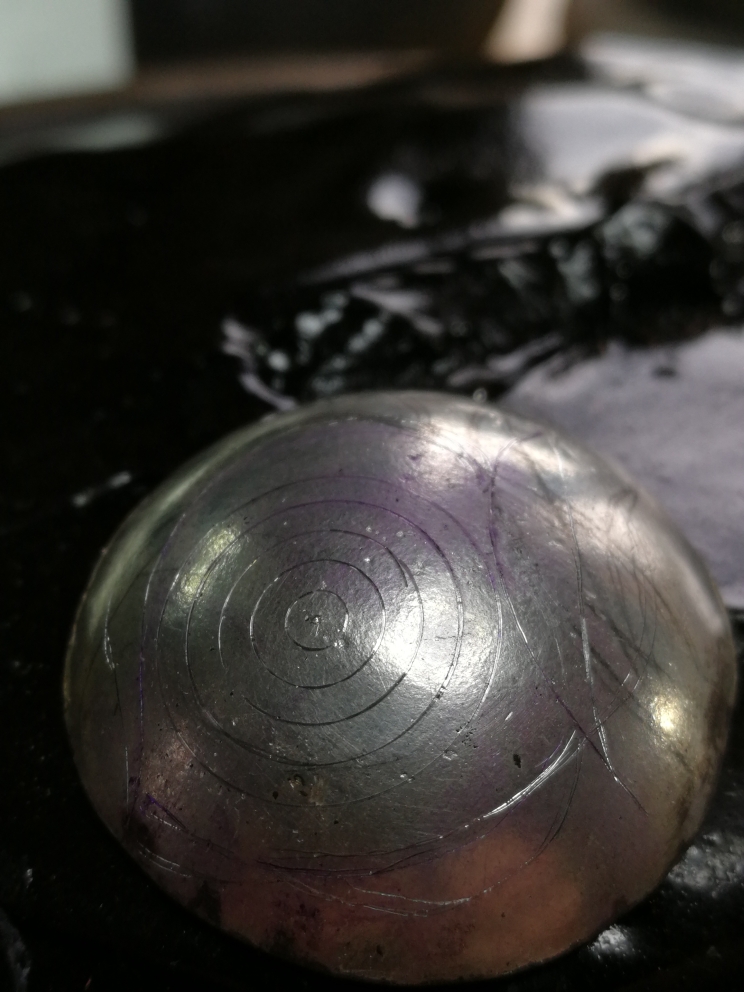
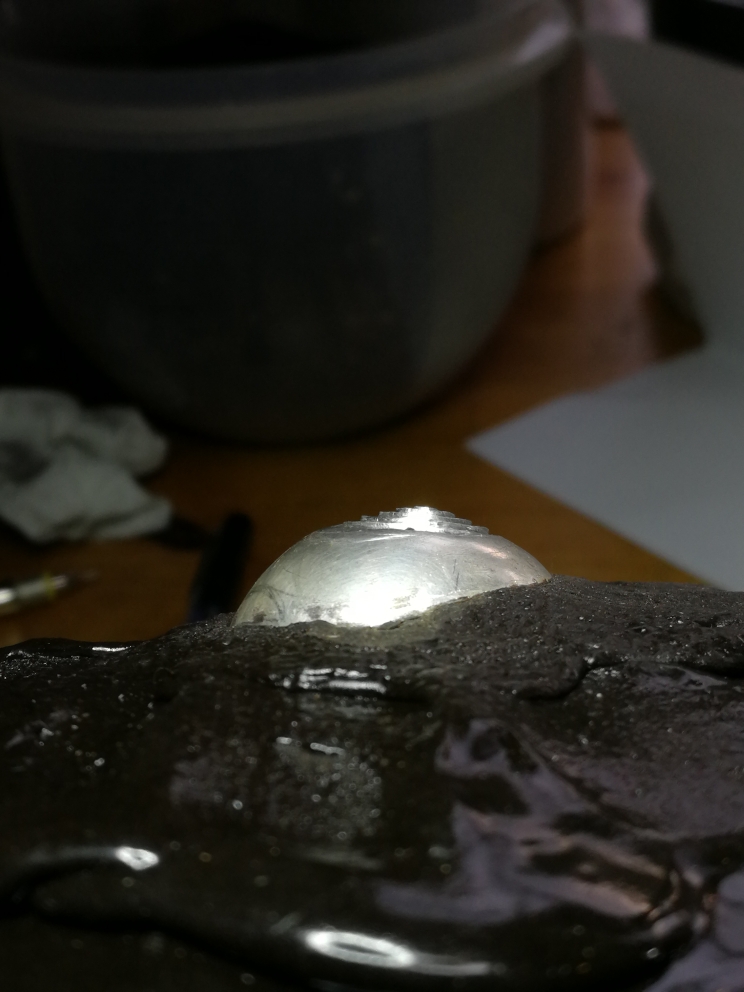
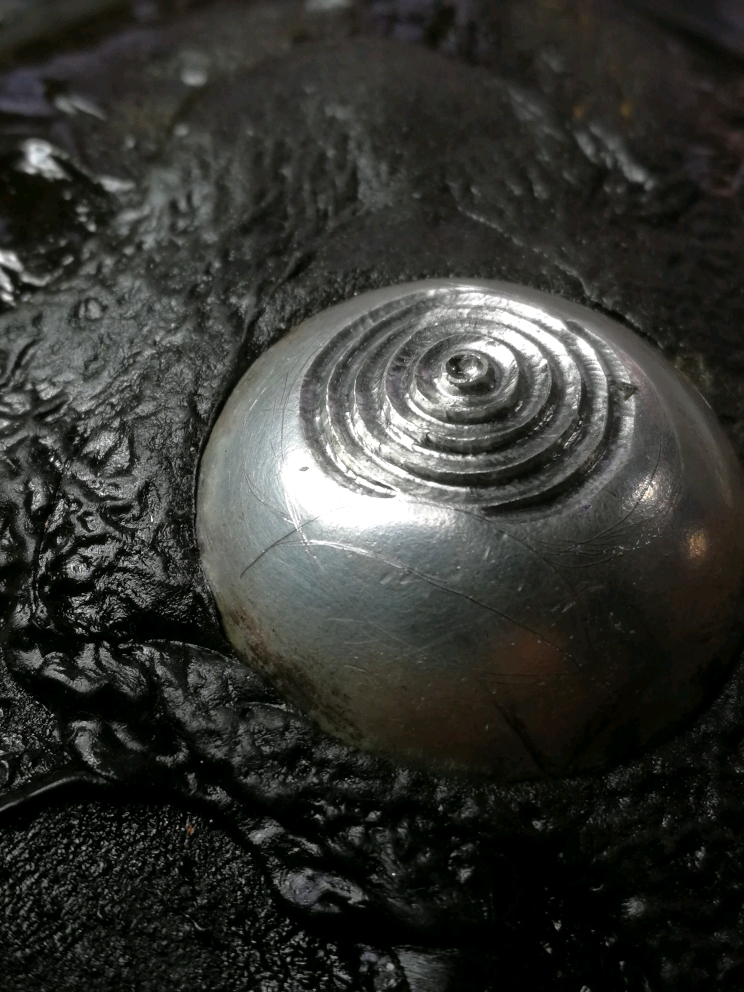
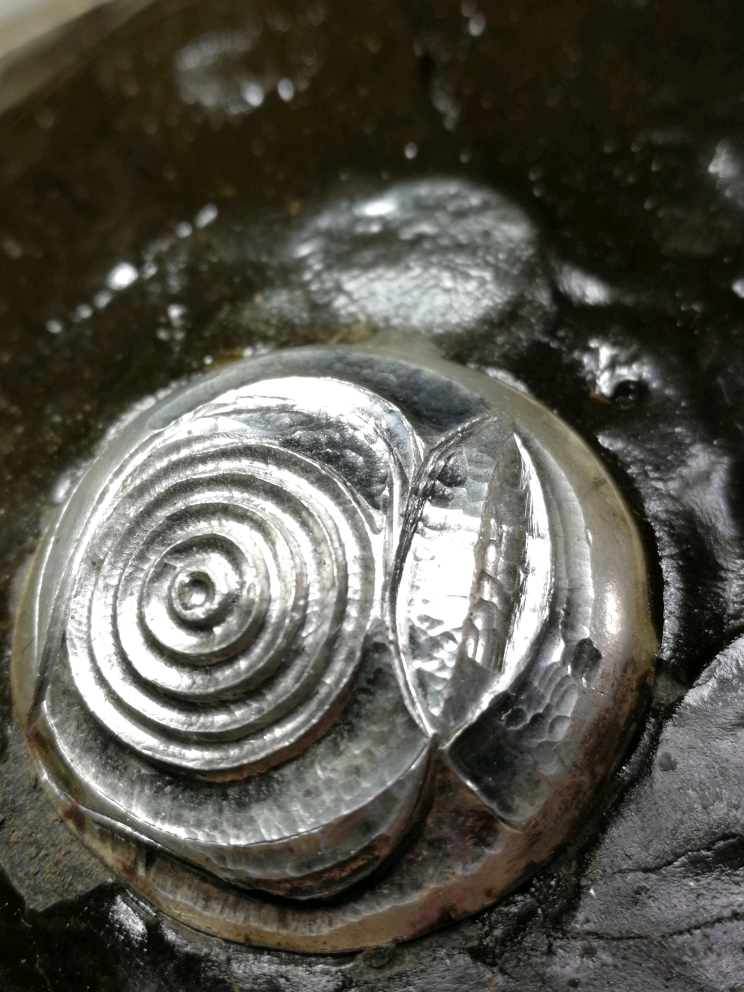
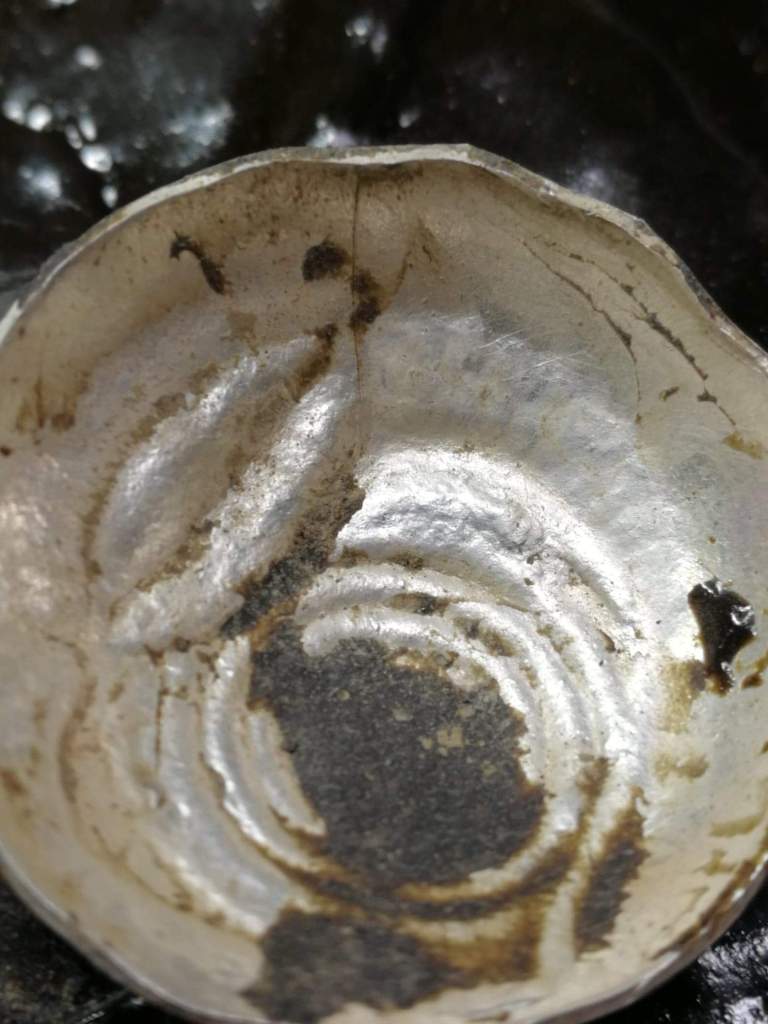
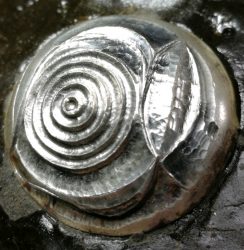
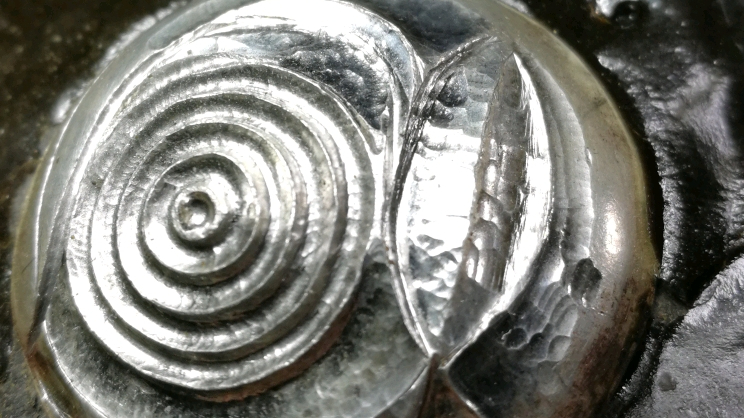
One particularly memorable evening of messaging with Ford had started with my sending Ford a copy of the ‘Cuts and Shuts…’ paper. The reply from Ford started with a comment that he was ‘Just [having] a little tinkering before I pop to the pub’. Attached to the email was the first of many photos which would arrive over the next 90 minutes – and which increasingly excited me. In his ‘tinkering’, Ford had replicated the concentric circle decoration seen on torcs like the Netherurd terminal and Snettisham Great torc, and had shown it could be done in sheet gold, using only an exterior working technique: this blew a previously held theory that it couldn’t be done, right out of the water. We wrote all this up in a joint paper, ‘Going round in circles: the relief decoration of Iron Age gold torcs’, in the Prehistoric Society’s newsletter PAST.
As the pandemic hit, our conversations lessened and as Ford’s health deteriorated we talked less often. We had still never, and did never, meet in person. The torc work that he has been such a part of moved in to other areas, but we still talked about maybe one day making a torc. Ford, with his years of experience and skill thought it would be a pretty straightforward undertaking, and I’m sure he was right: he could have easily made one in the ‘few weeks’ he had estimated. But sadly, we never got to find out.
I’d like to finish with Ford’s own words from one of our messages:
‘My own approach to metalwork always proceeds from the fundamentals in terms of raw materials and tools, and with aspects like fuel and material availability as further limiting factors. Essentially working from the same place as the artists and craftspeople I am trying to understand. ‘
As part of the Torc Collective, he more than achieved an understanding of the Iron Age goldsmiths of 2500 years ago. So here’s to Ford: a colleague, friend and fellow torc explorer. I like to think that, wherever he is now, he will be making that torc and wowing all those who see it.
Ford Hallam, 8th June 1963 – 10th August 2024.


Hello Tess.
This is a lovely, heartfelt and beautiful tribute. Ford was my brother in law. He is very, truly missed.
x
LikeLike
I only knew him a little, but he had such a wonderful impact on our work, and was such fun to work with too. I’m so sorry for your loss. Xx
LikeLike