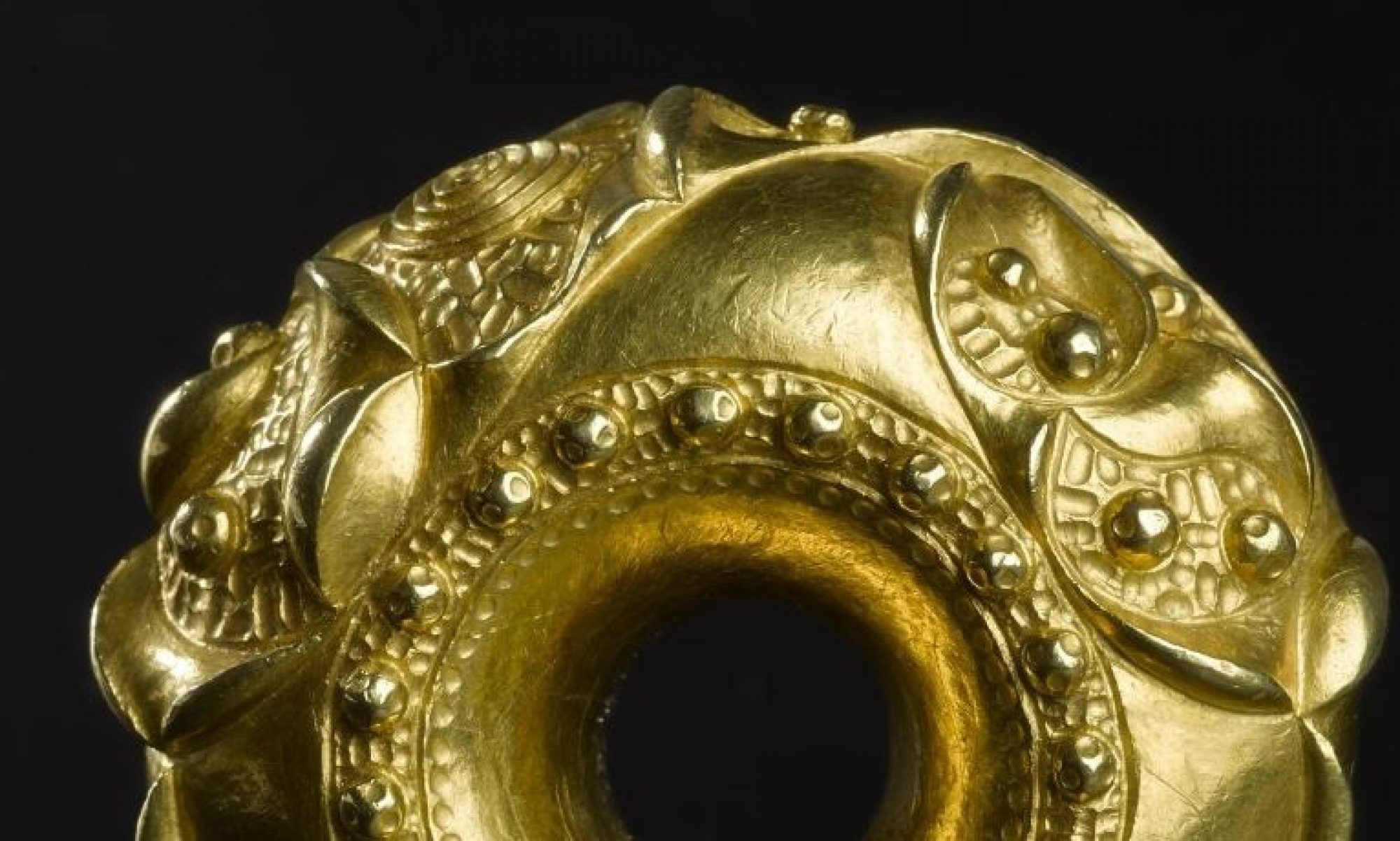

Hello folks! Long time no speak! I just wanted to write a very brief blog to say I haven’t forgotten about the Staffordshire Torc Odyssey! I am awaiting access to the final torc, Glascote. Not at all the fault of anyone or the museum: they are undergoing a staged re-opening and so access is tricky right now.
This is pretty normal for my research: I am quite often juggling a couple of projects at a time as access is usually not immediate (to be honest, we really got lucky with the first four torcs in this case!). The fact is, curators are busy people, the museum sector is chronically underfunded, and precious things need curator’s time to oversee research visits. When museums are under stress – despite all the incredibly hard work of museum staff – research inevitably suffers.
So, even without Glascote, where are we so far? Well, there hasn’t been anything that has immediately leapt out to link the five torcs beyond their deposition sites near roads/rivers. The one torc that has stood out as unusual – and could possibly still be in the frame as a ‘Viking’ re-deposition – is Alrewas (thanks to its deposition location and the way the torcs have been bound) but that’s by no means certain. I also think that we seriously need to reconsider the theory that Iron Age torcs are buried on slopes or higher ground: not one of these torcs fits that idea. A preferred spot near roads/rivers definitely looks likely in this area of Britain.
But to be certain we need to see Glascote.
In the meantime, I am currently working on a new little torc project: the rather bizarre case of a missing torc from Essex . Is it really missing? Is it even a genuine Iron Age torc? Maybe you can help? Watch this space…
Until then, it’s good to torc!
 The Big Book of Torcs