by Tess Machling
[A download/print PDF version can be found at the end of the paper]
On 3rd July 2025 an important exhibition opened at L’ÉCOLE, School of Jewellery Arts in Paris.
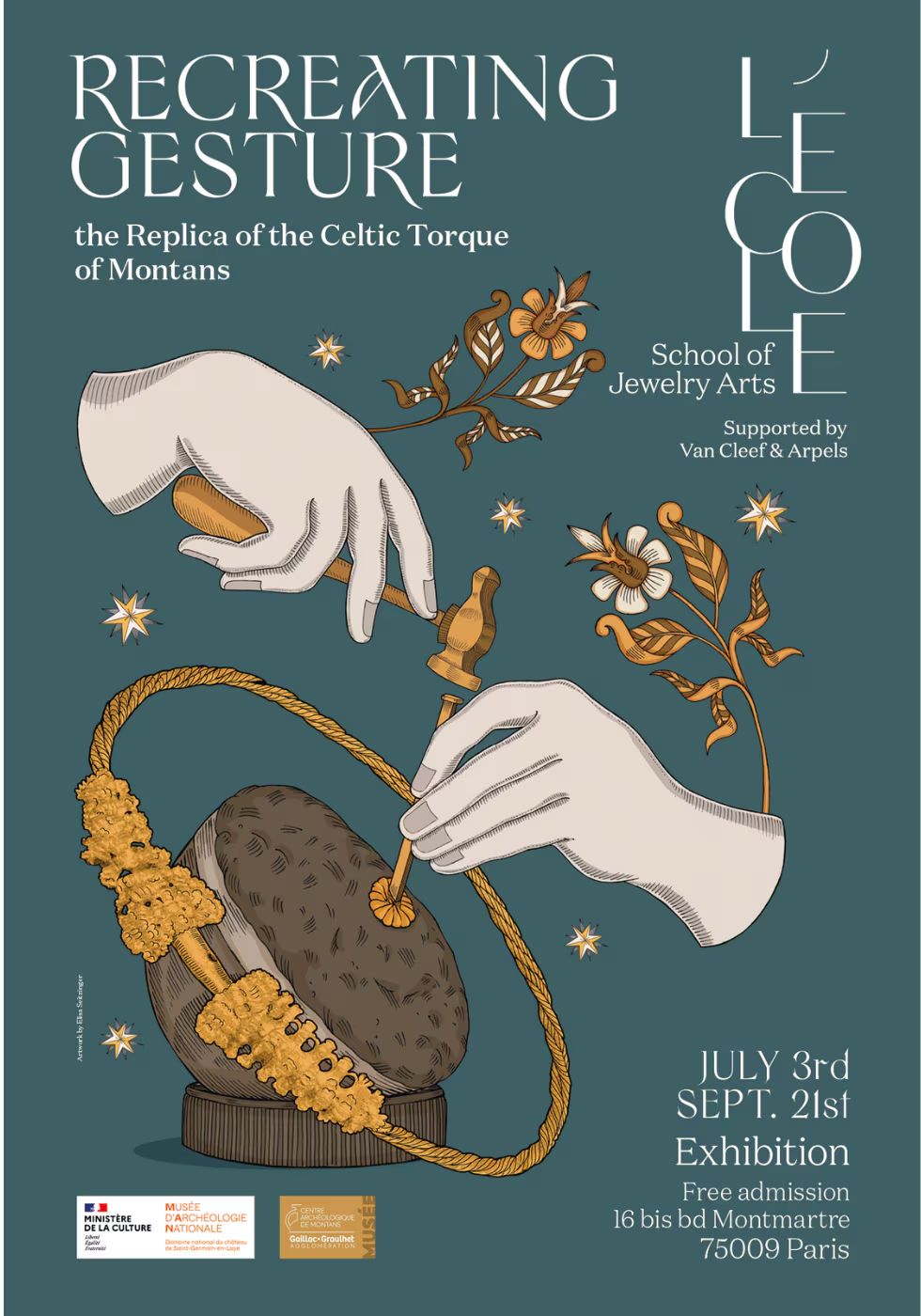
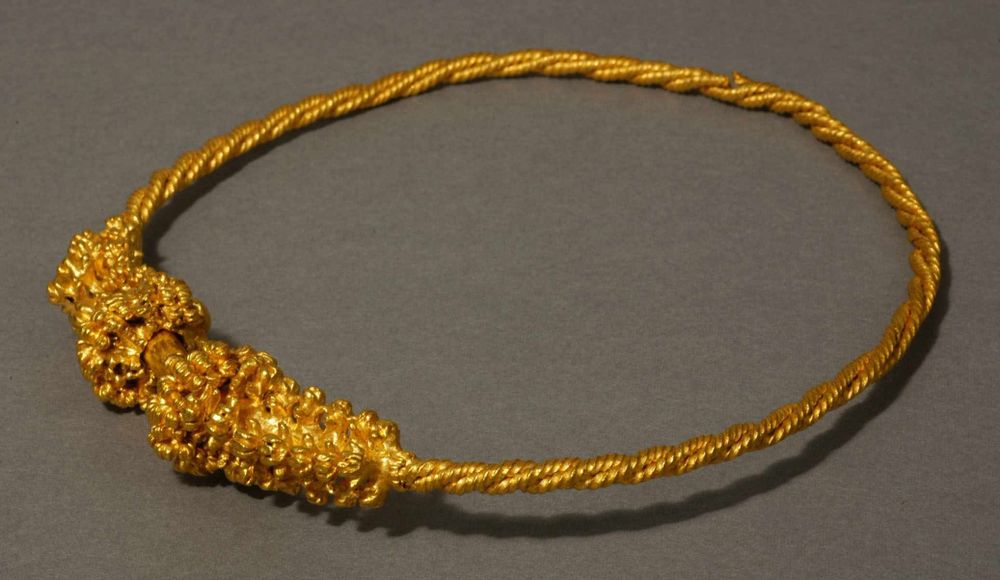
Working with Van Cleef & Arpels, the Centre Archéologique de Montans, the Musée d’Archéologie Nationale at Saint-Germain-en-Laye and Barbara Armbruster (an archaeologist and goldsmith from the CNRS), the team have recreated an Iron Age gold lobed torc found in Montans in the Tarn region of France in 1843, and likely dating from around 400-200BC.
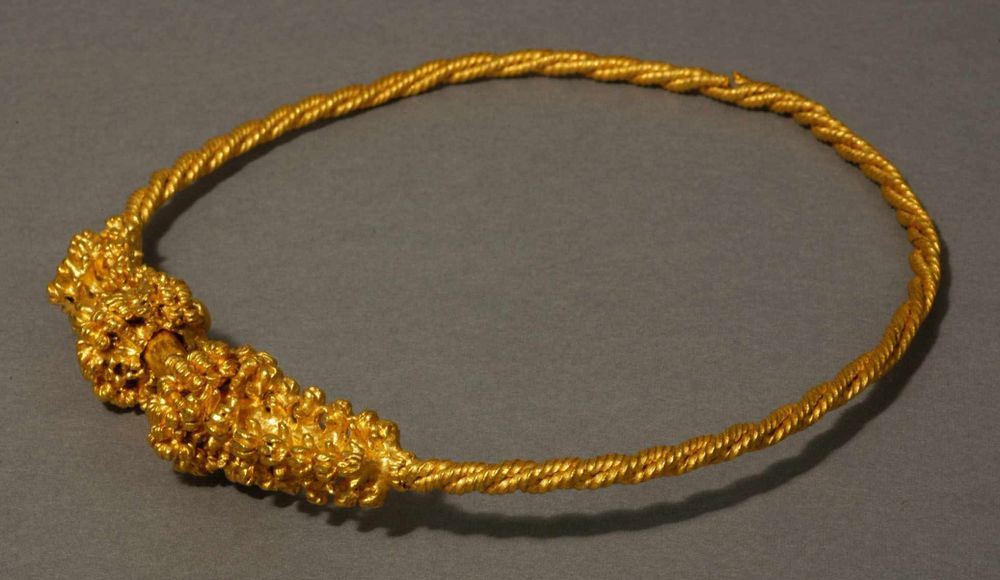
Although I mostly look at torcs found in Britain and Ireland I am, of course, also very interested in Iron Age torcs from elsewhere in Europe and beyond. Lobed torcs, like that from Montans, have always held a huge interest for me, not least because we have two such torcs from these islands, from the Blair Drummond/Stirling hoard from Scotland (Hunter 2018), and a torc from Ireland, whose precise findspot is unknown (Cahill 2010).
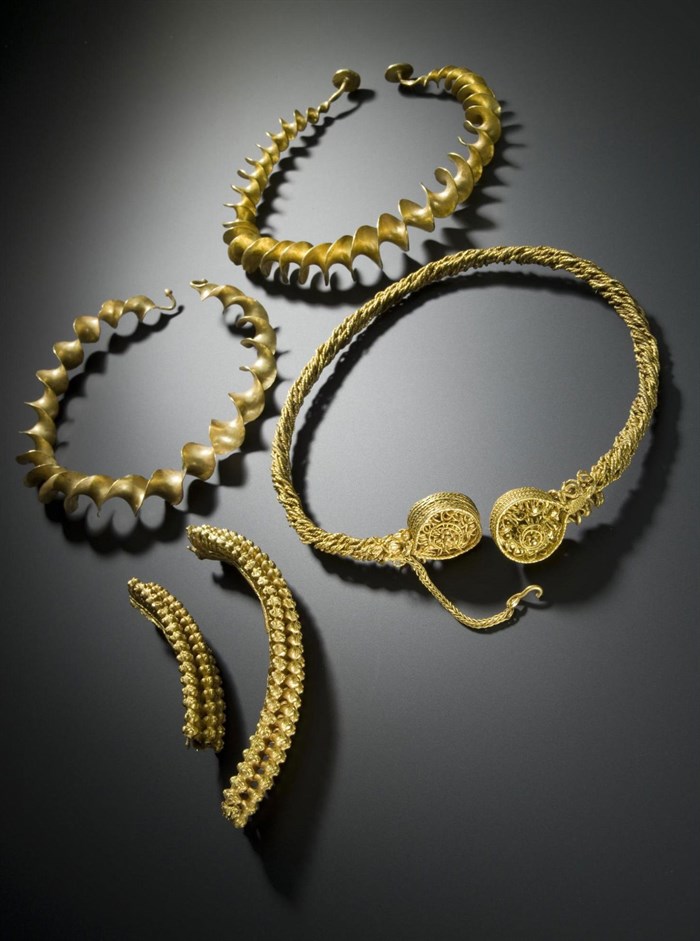
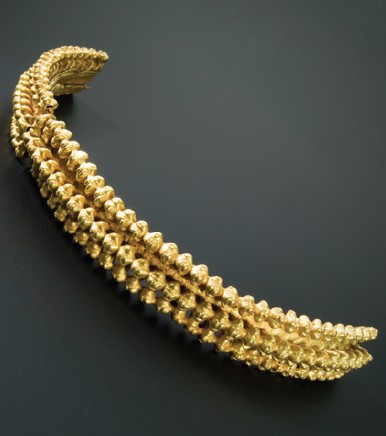
The Montans torc is one of several from France which also show this wonderful lobed decoration (Armbruster & Guerra 2012; Armbruster et al 2021): the French examples include those from Fenouillet (Haute-Garonne), Lasgraïsses (Tarn), Civray-de-Touraine (Indre-et-Loire) and Montans (Tarn). It was initially thought that this style of torc was very much a French phenomenon and that the Blair Drummond and Irish examples were imports, until alloy composition testing showed that these two torcs had a higher silver percentage than the French examples and, as such, were likely to be British/Irish made (Hunter 2018, 434).
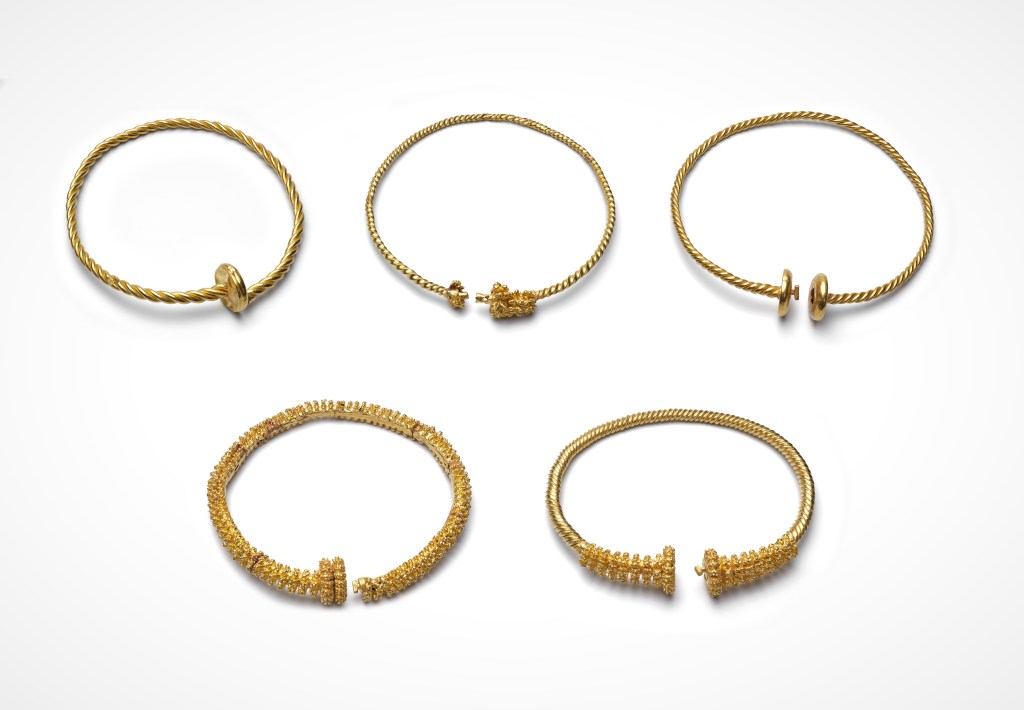
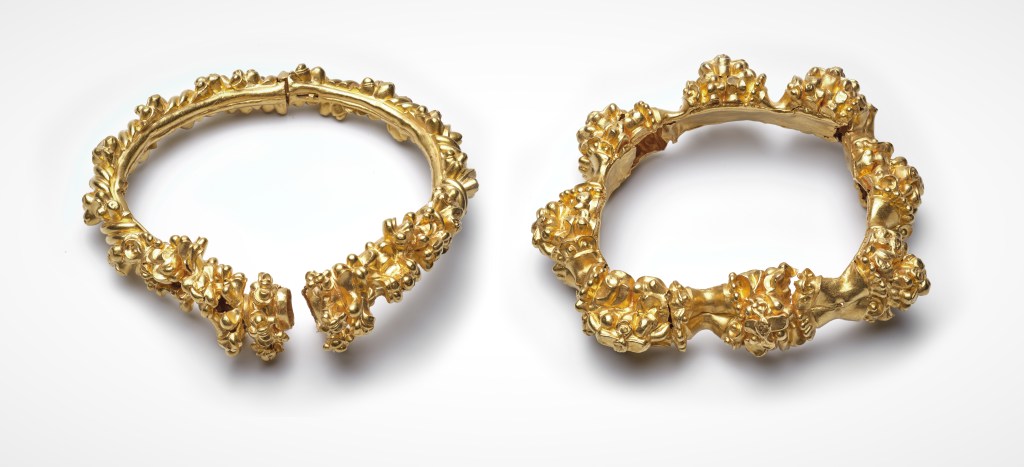
What has always interested me is that, until relatively recently, these torcs were described as having been cast (Eluère 1987), whereas to me it was blatantly obvious they really weren’t. Even the x-rays included in the publications showed a thinness of gold that would make casting impossible. More recently, researchers (Armbruster & Guerra 2012; Armbruster 2021) have suggested two different manufacturing techniques, with some torcs (Fenouillet and the Lasgraïsses neck ring) being described as having been cast, with others (the Lasgraïsses arm ring, Civray-de-Touraine and Montans torcs) described as having been made using sheet gold (Armbruster et al 2021).
However, I remain unconvinced (again, the x-rays and technology of these torcs just doesn’t look right to me) that all of these torcs are not sheet/hammered. However, I haven’t seen them in the flesh, so there may be something visible to those researchers that have, that has convinced them of their cast manufacture.
The French replication
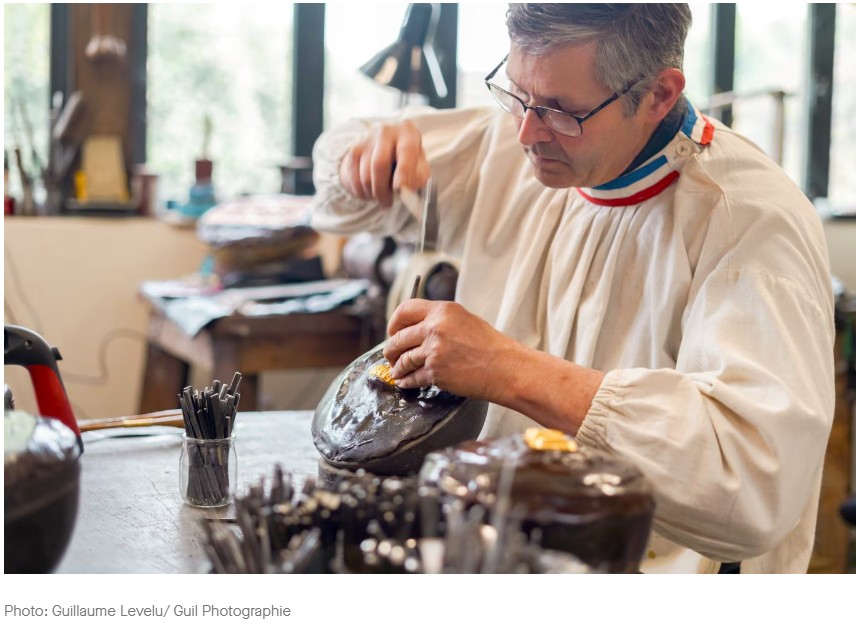
Although I have not been involved in any way in the replication of the Montans torc, there is a lot of information that has been made available by L’ÉCOLE, School of Jewellery Arts, Van Cleef & Arpels and the goldsmith, Antoine Legouy, who made the replica. I was really pleased to see Barbara Armbruster – who as well as being an archaeologist, is also a goldsmith – also involved. The choice of Antoine Legouy – a master goldsmith and Meilleur Ouvrier de France – to make the replica is also wonderful: craftspeople with such high levels of training, knowledge and experience are essential in such tasks.
The aim of the project, ‘to achieve an understanding of the skills and techniques of a given period by reproducing the object studied’ is exactly what I’d hope to see, but the description of the replication project as ‘radically new’ shows just how little has previously been done in this important field of research.
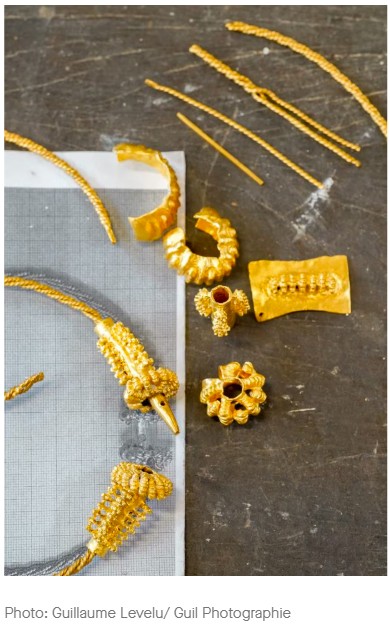
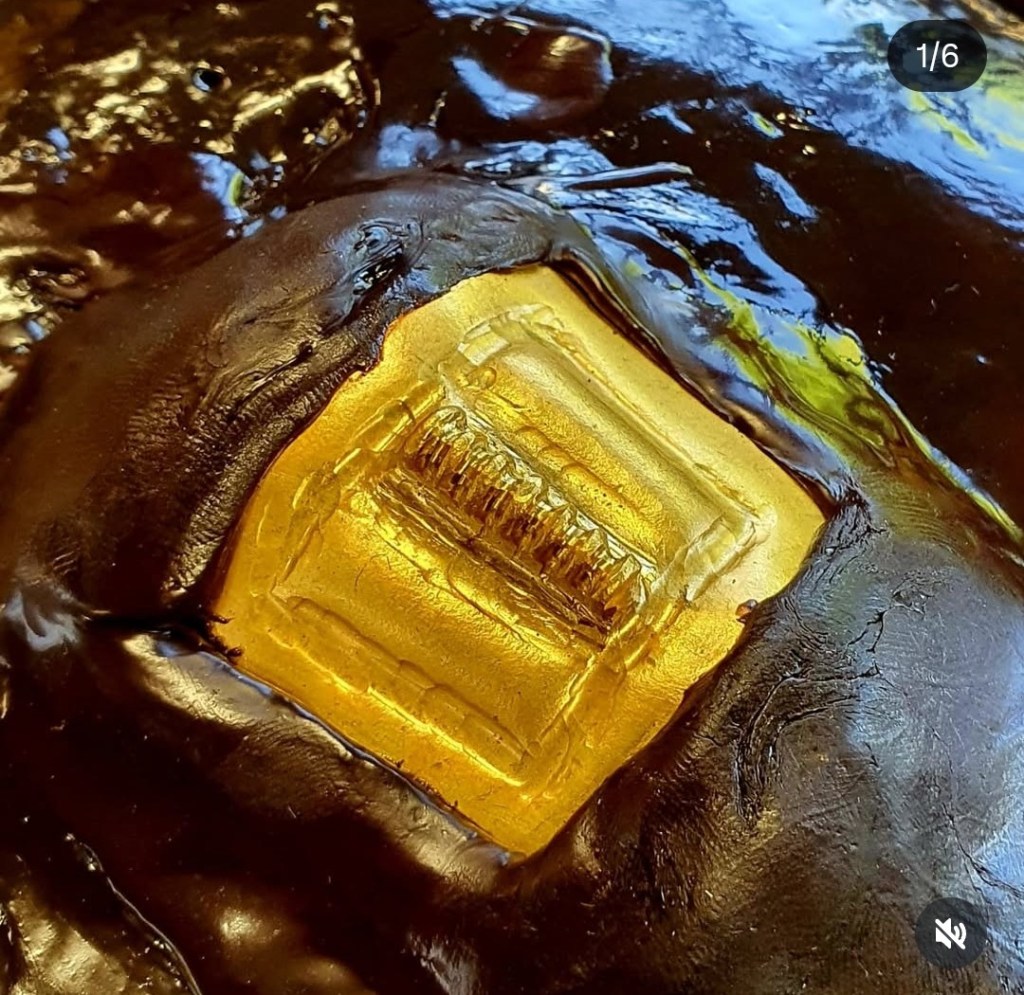
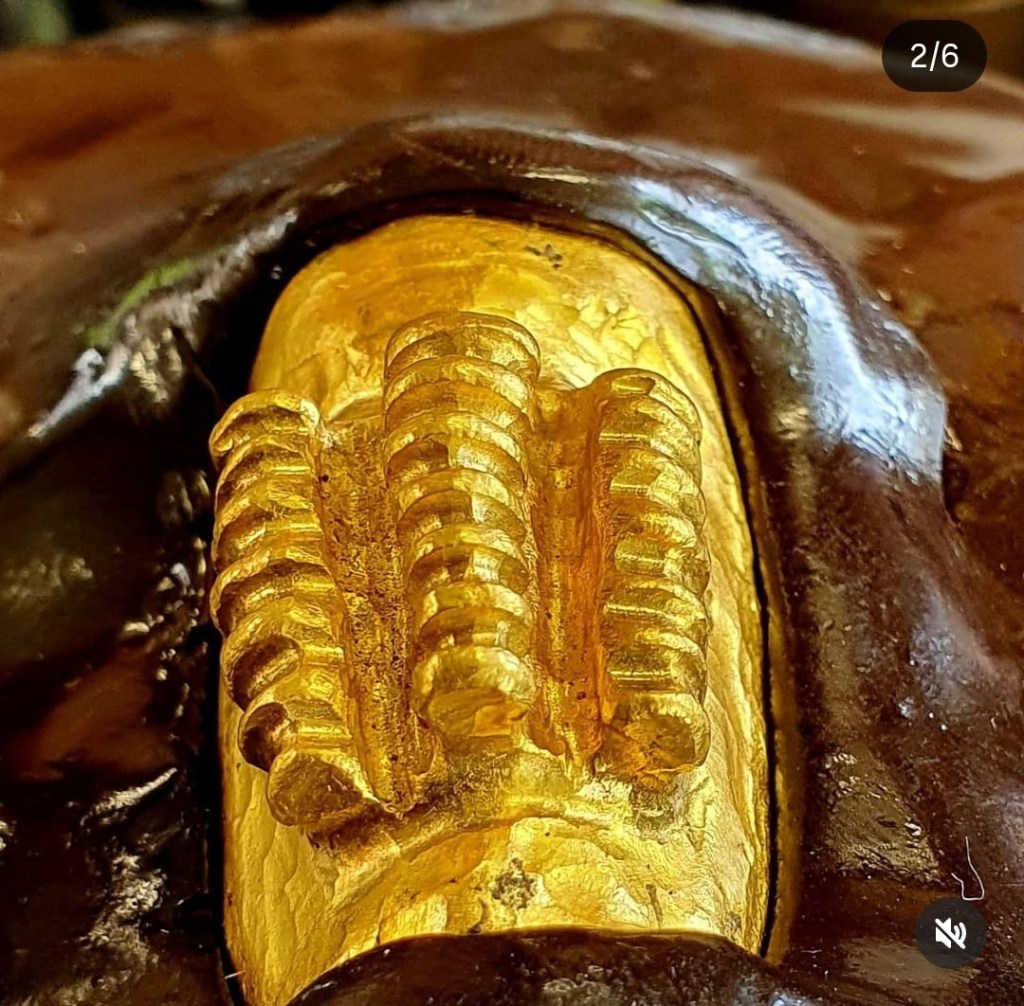
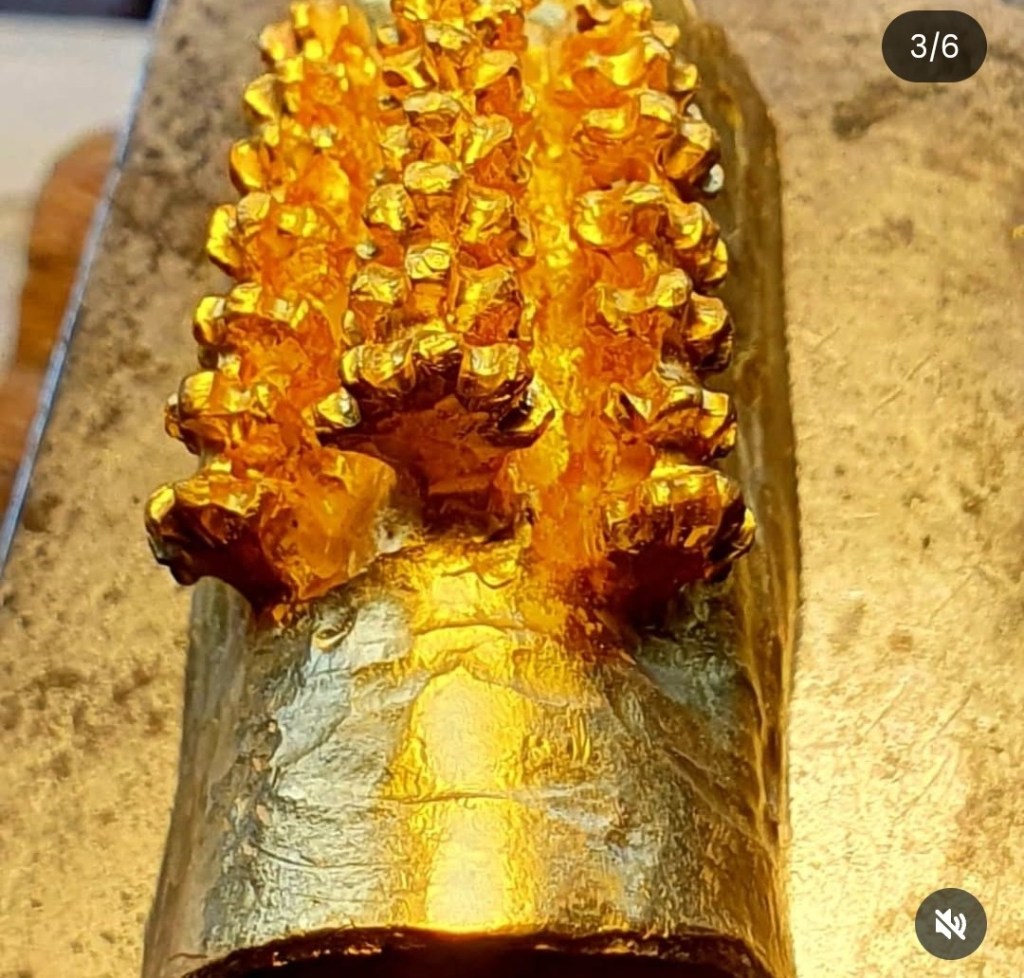
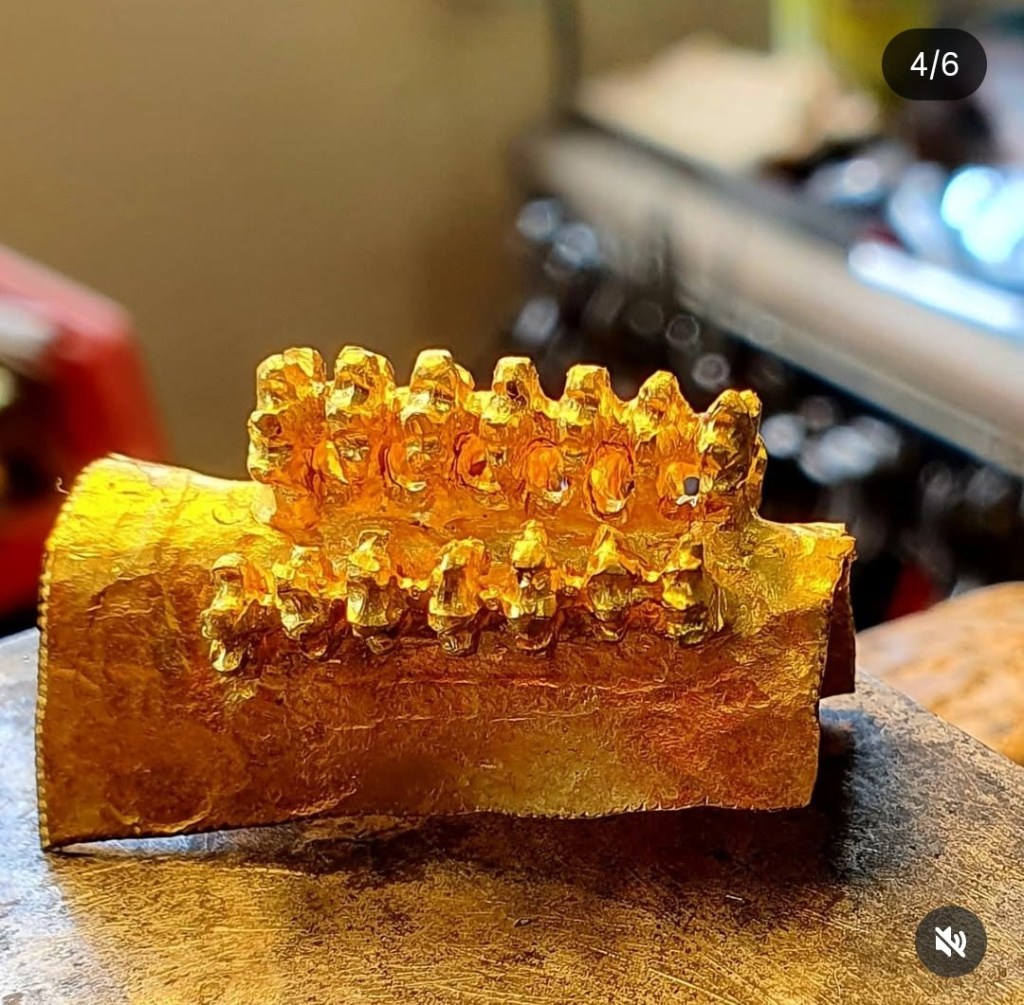
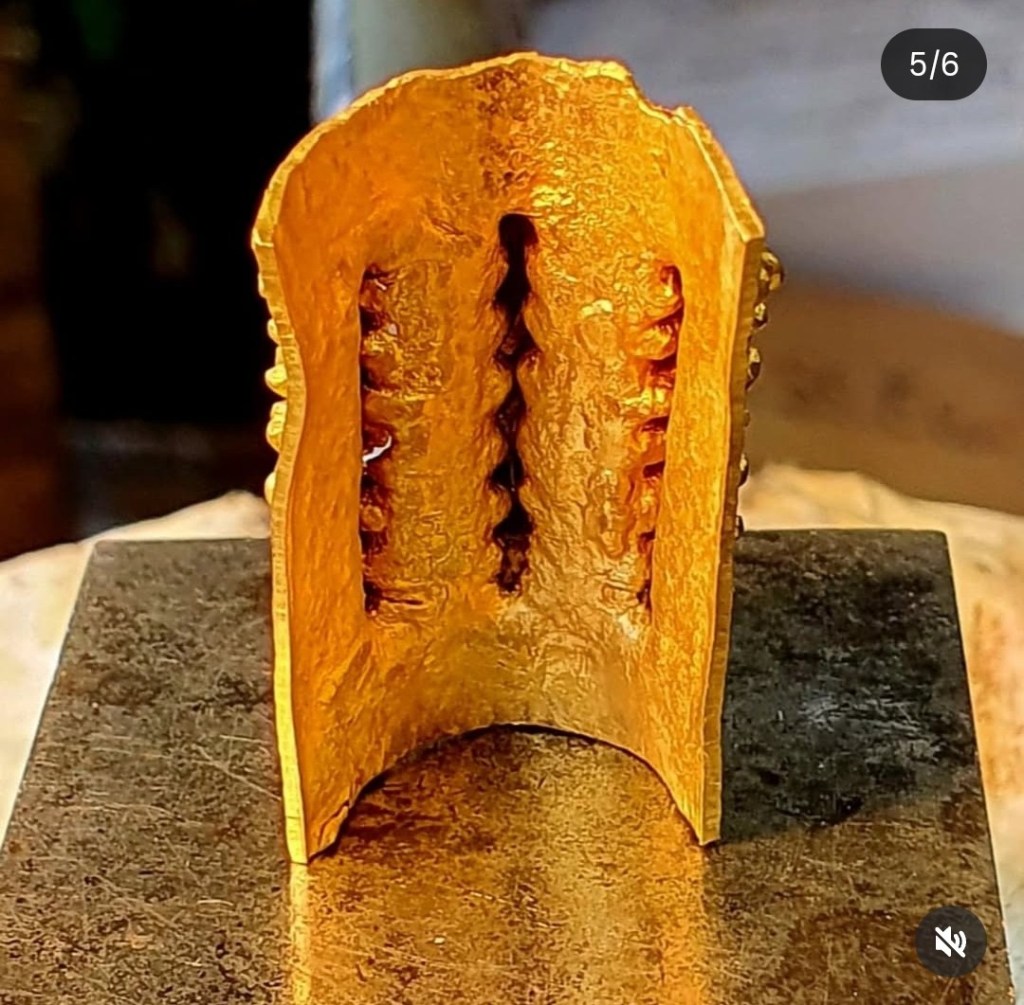
From the images shared on social media by Antoine Legouy, the technique is very much what I would have thought: sheet gold marked out and then roughly form-shaped from the back, before most of the detail was added from the front: the late Ford Hallam, who first suggested to me that this was how these torcs were achieved, would be proud. One slight criticism that I do have is that the work is described in modern, Western, jewellery terms whereas it is almost certain that the goldsmiths of the Iron Age (or indeed those of many other non-Western cultures) wouldn’t have thought in terms of ‘repoussé’ or ‘chasing’, but would have worked the gold in ways that worked for them, and for the gold in their hands.
What also stood out to me – in the images shared by Van Cleef & Arpels – is again, the small number of tools needed, the miniaturisation of hammers, punches and anvil and the ‘cleanness’ of the workshop. How would archaeologists ever expect to find any trace of such working spaces, if the gold was no longer present, and the tools had been moved? There’s a reason that, beyond a few crucible fragments (Bayley 1992), we really can’t be sure where gold artefacts were made, and by whom!

The Blair Drummond/Stirling torc
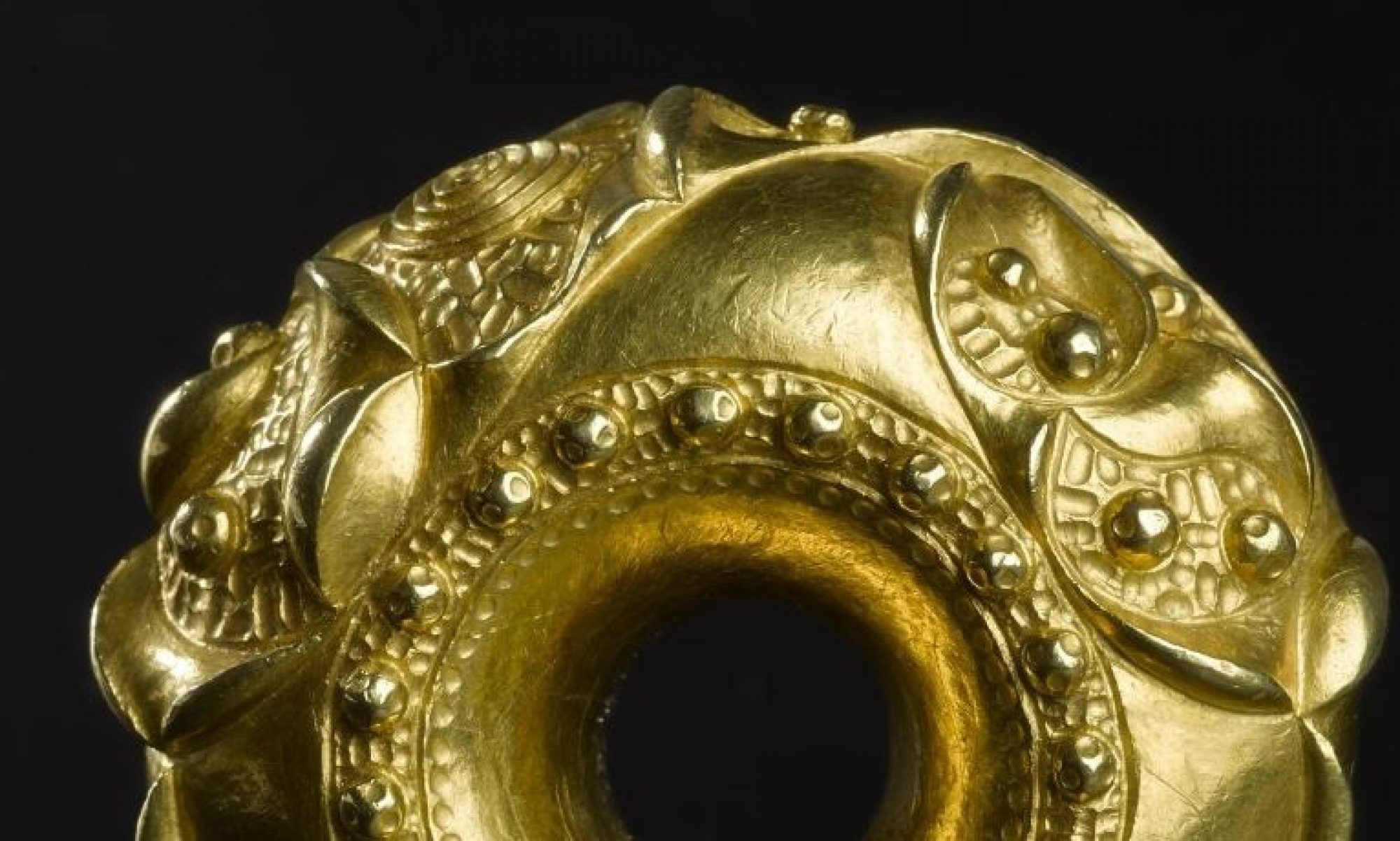
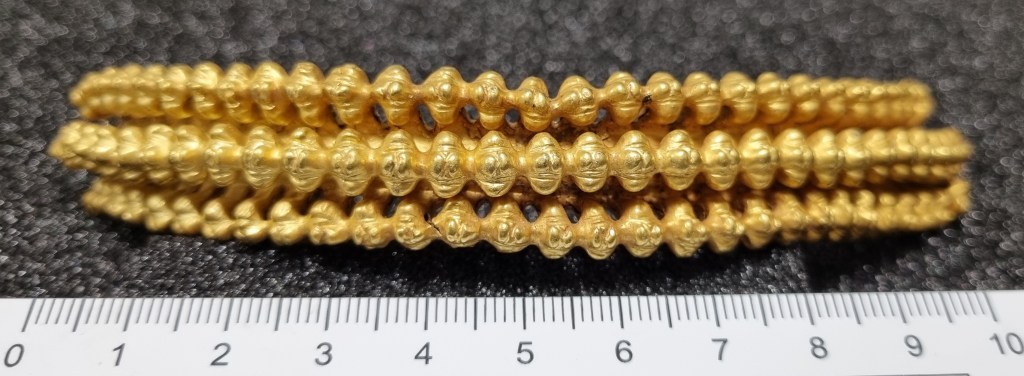
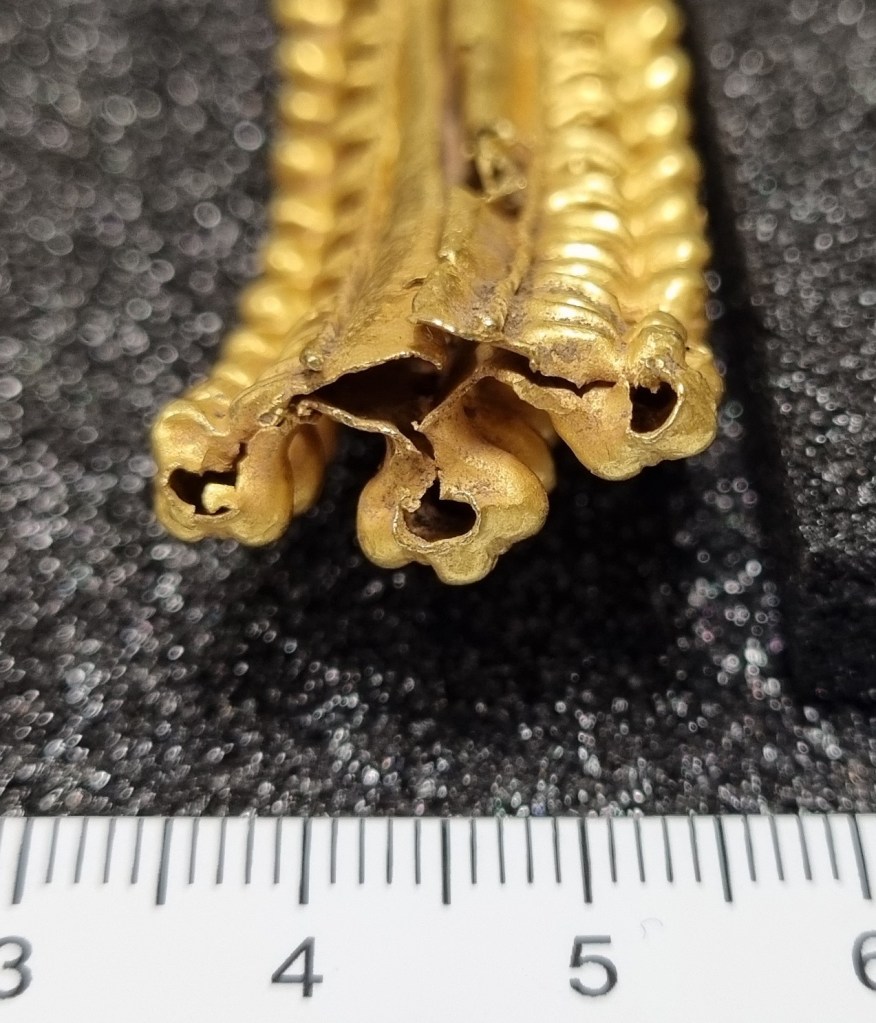
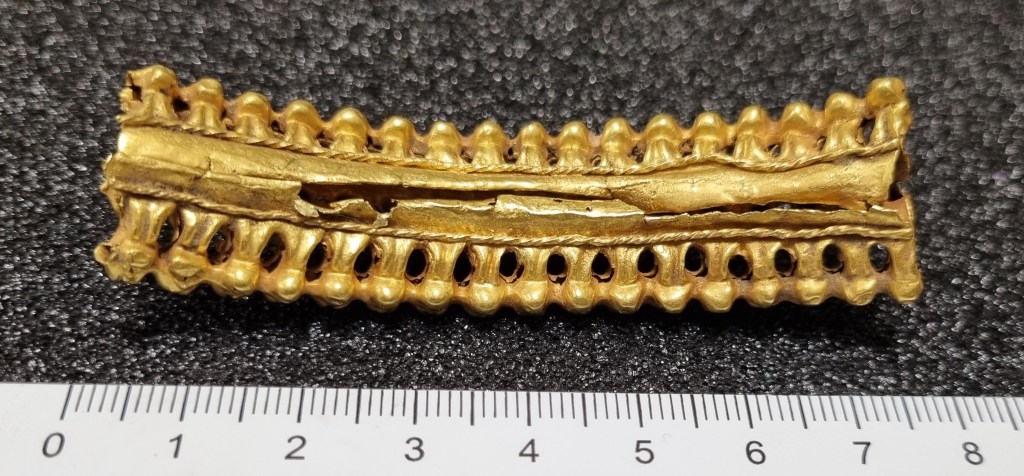
I was lucky enough to be able to examine the Blair Drummond/Stirling lobed torc. When I did it was obvious that this lobed torc had been made from sheet gold, hammered and manipulated from a flat sheet into a 3D tube of complexly decorated form.

The replication photos of the Montans torc, shared by Antoine Legouy on Instagram, clearly show how the Blair Drummond/Stirling lobed torc was likely made, with the flat sheet gradually formed into complex shapes by a process of working both the front and back of the gold:

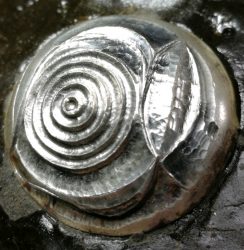
The broken end and back of the Blair Drummond/Stirling torc sections clearly show this process:
Enfin…
Sadly, I’m not in Paris to be able to go and see this exhibition, but if you are, really do go: it’s on until September, when it moves to Lyon… and it’s free. I really hope that at some point there will be a publication detailing the nitty-gritty of the make for us torc-making addicts.
But in the meantime: it’s good to torque! 🇫🇷
(If you’d like to support my work as an unfunded independent researcher, then please buy me a ‘coffee’. Thank you 🙂 )
References
Armbruster, B & Guerra, M. F. 2012. Annular gold ornaments from western Gaul: Archaeometallurgical aspects of the Lasgraȉsses ensemble, Tarn, France (3rd century BC). Historical Metallurgy 46 (2), 55–65
Armbruster, B., Nordez, M., Blet-Lemarquand, M., Milcent, S-Y., Nieto-Pelletier, S., Schönfelder, M. and Schwab, R. 2021. Celtic gold torcs – An interdisciplinary and diachronic perspective. Monographies Instrumentum 73, 433-456
Bayley, J, 1992. Goldworking in Britain from Iron Age to Medieval times. Interdisciplinary Science Review 17 (4), 314-321
Cahill, M. 2010. Safe Secrets 2 – a newly discovered Iron Age Gold torc. Archaeology Ireland 24(2), 6–7
Eluère, C. 1987. Celtic gold torcs. Gold Bulletin 20, 22–37.
Hunter, F. 2018. The Blair Drummond (UK) hoard: Regional styles and international connections in the later Iron Age. In Schwab, R; Milcent, P-Y; Armbruster, B & Pernicka, E (eds), Early Iron Age Gold in Celtic Europe: Science, technology and Archaeometry. Proceedings of the International Congress held in Toulouse, France, 11-14 March 2015, 431-440. Rahden: Verlag Marie Leidorf GmbH
 The Big Book of Torcs
6 Replies to “The Montans torc: working with goldsmiths.”