The Staffordshire Torc Odyssey: 5 Middleton Hall

First things first: from the last blog it seems we all want to live in Torc Avenue! Several folks thought we should have more artefact themed roads, which I couldn't agree with more. Anyone know of any others? But back to the torcs and this time I have an apology to make: I assumed that …

The Staffordshire Torc Odyssey: 4 Glascote

Firstly, a bit of a catch up! Thank you to the 150+ folks who've read the blogs so far, and to those who've subscribed to read more (remember to hit 'Subscribe' at the bottom of the page, if you want to be one of them). A couple of comments from the Shenstone blog have come …

The Staffordshire Torc Odyssey: 3 Shenstone

Well, here we are again, folks. I'll add a few updates from the previous two blogs first. As regards pronouncing 'Alrewas': Several Staffordshire people have put forward a variety of pronunciations, so I'm still not much the wiser (although fascinated by all the different ways!). Some suggest you pronounce it as it's written, a few …

The Staffordshire Torc Odyssey: 2 Alrewas

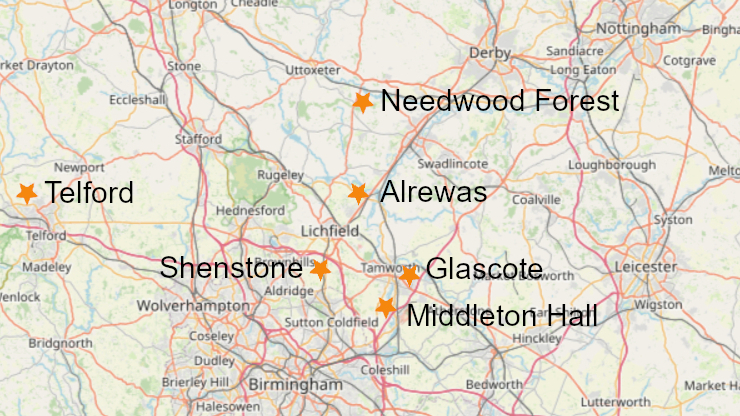
Whenever I start a new piece of work, there's always something that sets me off on the path of discovery, the thing that makes me think, 'Oooo! That's interesting, I wonder if...?'. In the case of this project it was a cluster of torc discoveries in a small area of Staffordshire that I noticed when …

The Staffordshire Torc Odyssey: 1 The idea

I love to share torc research, and any of you who follow me on social media will know that my feeds are full of snippets, thoughts and ponderings - some turn out to be dead ends, some get noted for later use and some lead to fully-fledged theories and papers (see HERE for our work …

Nicked and ‘nicked’: The Knaresborough gold ring and a possible Viking-redeposited Iron Age hoard from eastern England.

by Tess Machling, Roll Williamson & Mark Randerson [A download/print PDF version of the paper & Appendix 1 can be found at the end of the paper] This paper can be cited as: DOI 10.5281/zenodo.10973036 Abstract The Knaresborough ring is a unique find. Found in 1994 in Knaresborough, Yorkshire, the ring is made from sheet …

The sheet torus torcs from Britain: an update.

by Tess Machling & Roll Williamson [A download/print PDF version can be found at the end of the paper] This paper can be cited as: DOI 10.5281/zenodo.10511424 Abstract In our 2018 Proceedings of the Prehistoric Society paper (Machling & Williamson 2018) we discussed the manufacturing techniques of the Netherurd terminal, the Newark torc and suggested ideas …

‘All the right notes, but not necessarily in the right order’: The riddle of the ‘Pulborough Area’ torc from Sussex.

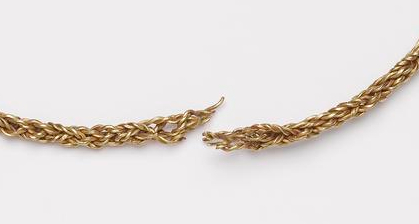
A gold broken torc in a plastic box, resting in tissue paper. The box is sat on a notebook

by Tess Machling, Roll Williamson & Giovanna Fregni [A download/print PDF version can be found at the end of the paper] Abstract This paper can be cited as: DOI 10.5281/zenodo.10511405 The ‘Pulborough Area’ torc is a chimera: apparently made from the correct Iron Age material, using a valid construction technique and in a known form, however, …

Beyond Snettisham: a reassessment of gold alloy torcs from Iron Age Britain and Ireland.

[A download/print PDF version can be found at the end of the paper] This paper can be cited as:  https://doi.org/10.5281/zenodo.10629085 Those of you who have followed our work for some time will know that we aim to carry out, and share, our research in original ways. From independently peer reviewed papers to chocolate torcs, we …

Pattern and purpose: a new story about the creation of the Snettisham Great torc.

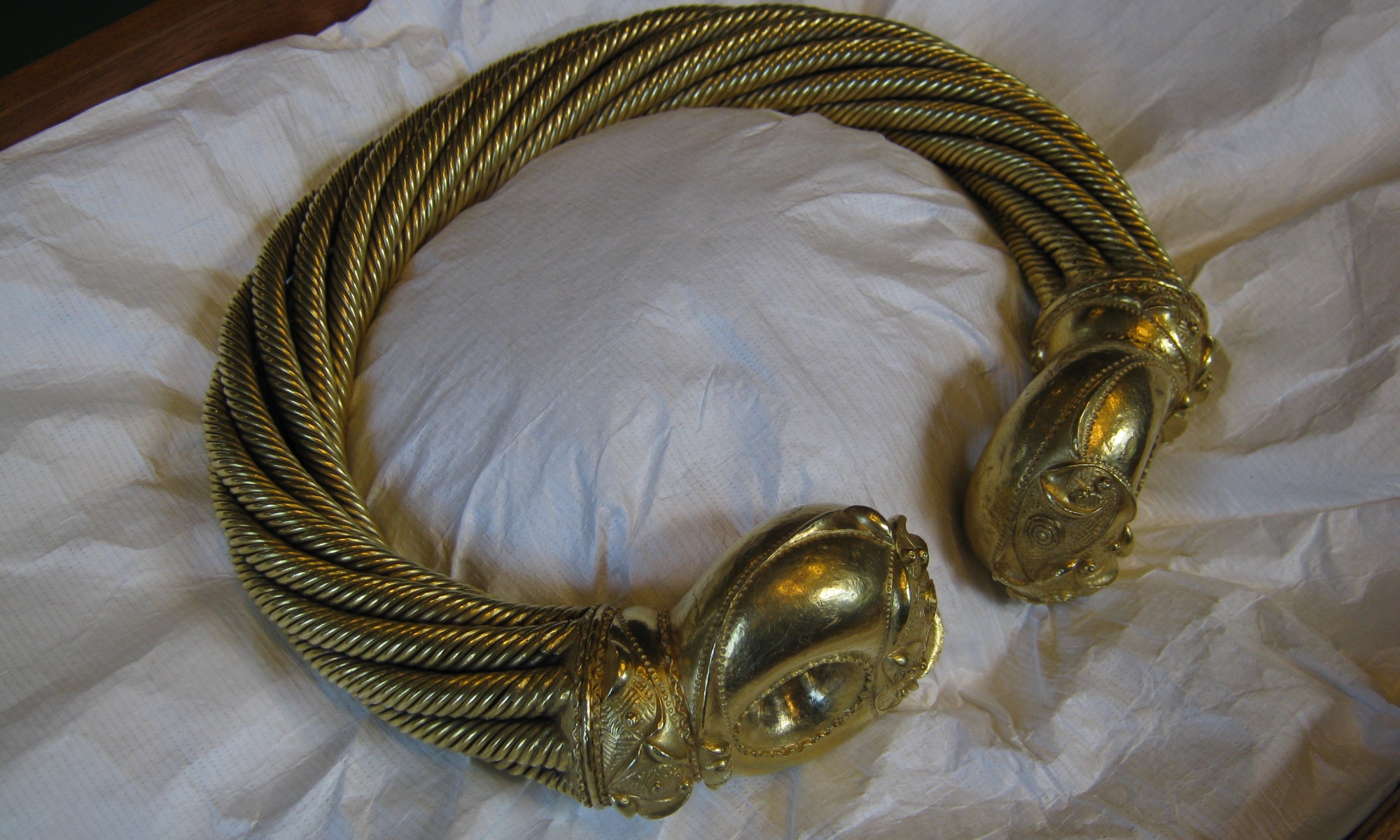
by Tess Machling [A download/print PDF version can be found at the end of the paper] This paper can be cited as: DOI 10.5281/zenodo.10511411 The Snettisham Great torc is one of the most recognisable and well known Iron Age artefacts in Britain. Found in 1950 by Tom Rout, whilst ploughing fields on the Ken Hill estate …