Detecting and torcs: a researcher’s view.

by Tess Machling [A download/print PDF version can be found at the end of the paper] This paper can be cited as: DOI 10.5281/zenodo.14548720 I've been meaning to write this piece for years, but a recent increase in the number of significant archaeological finds which have been removed from the ground, by folks with little …

Nicked and ‘nicked’: The Knaresborough gold ring and a possible Viking-redeposited Iron Age hoard from eastern England.

by Tess Machling, Roll Williamson & Mark Randerson [A download/print PDF version of the paper & Appendix 1 can be found at the end of the paper] This paper can be cited as: DOI 10.5281/zenodo.10973036 Abstract The Knaresborough ring is a unique find. Found in 1994 in Knaresborough, Yorkshire, the ring is made from sheet …

‘All the right notes, but not necessarily in the right order’: The riddle of the ‘Pulborough Area’ torc from Sussex.

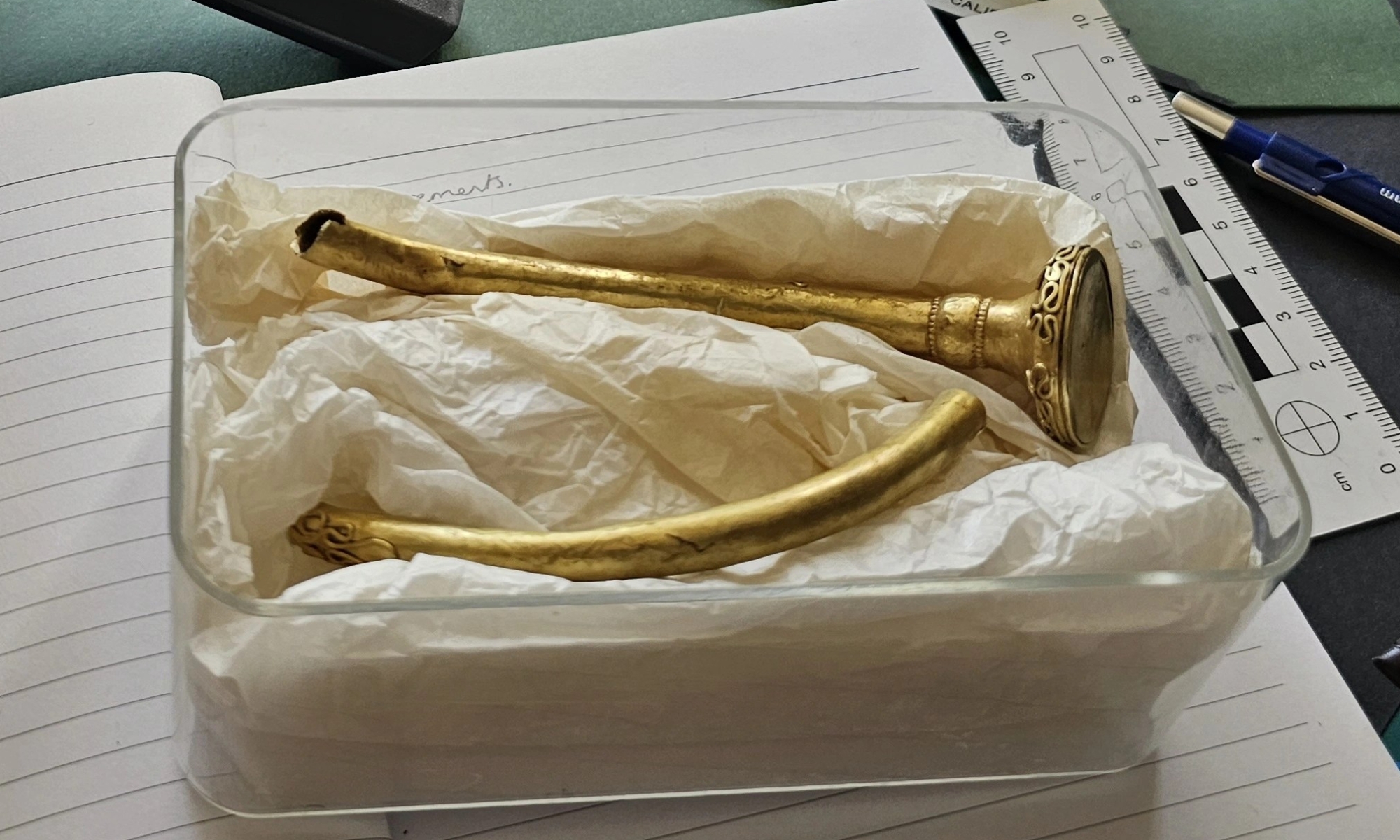
A gold broken torc in a plastic box, resting in tissue paper. The box is sat on a notebook

by Tess Machling, Roll Williamson & Giovanna Fregni [A download/print PDF version can be found at the end of the paper] Abstract This paper can be cited as: DOI 10.5281/zenodo.10511405 The ‘Pulborough Area’ torc is a chimera: apparently made from the correct Iron Age material, using a valid construction technique and in a known form, however, …

Beyond Snettisham: a reassessment of gold alloy torcs from Iron Age Britain and Ireland.

[A download/print PDF version can be found at the end of the paper] This paper can be cited as:  https://doi.org/10.5281/zenodo.10629085 Those of you who have followed our work for some time will know that we aim to carry out, and share, our research in original ways. From independently peer reviewed papers to chocolate torcs, we …

Pattern and purpose: a new story about the creation of the Snettisham Great torc.

by Tess Machling [A download/print PDF version can be found at the end of the paper] This paper can be cited as: DOI 10.5281/zenodo.10511411 The Snettisham Great torc is one of the most recognisable and well known Iron Age artefacts in Britain. Found in 1950 by Tom Rout, whilst ploughing fields on the Ken Hill estate …

The problem of Iron Age gold sources.

(This was cropped from a previous paper as it didn't fit, but thought it was worth putting here as a blog: not peer reviewed, not definitive, but might spark some ideas....) At present, the sourcing of gold used to make Iron Age artefacts from the United Kingdom is unresolved. For Irish material, work by Warner …

Torc fragment cross-joins AKA how to make a torc jigsaw!

During the process of creating the Torc Treasury database, I kept noticing multiple fragments of the same, very distinctive, gold alloy torc coming up in Snettisham Hoard F. [Well, I think they're all from Hoard F, the problem being that although they all - bar one, but more about that later! - have a 1991 …

Looking at torcs: The B52, first steps.

When we look at torcs, the first stage of analysis usually involves photos. We have a lot of photos: my Kindle Fire currently contains about 6000 of them, cribbed from websites and online catalogues, or taken by Roll and myself. That's a lot of pics. By going through these photos on a regular basis we …

Lesser spotted torcs 1: Cushion torcs

Snettisham inevitably - being the largest collection of torcs and torc pieces ever found and with the Great torc to the fore - tends to dominate the Iron Age torc world. It should not, however, be forgotten that there are upwards of fifty other torcs represented in other parts of Britain, when incomplete examples, or …

Confounded and bamboozled.

Part of the reason to commit our thoughts to ‘paper’ on the subject of torcs was that we have rather different approaches to the research to many in the field. I have a very much hands on approach which is tantalisingly difficult to achieve as you can’t really be too investigative with these delicate items! …