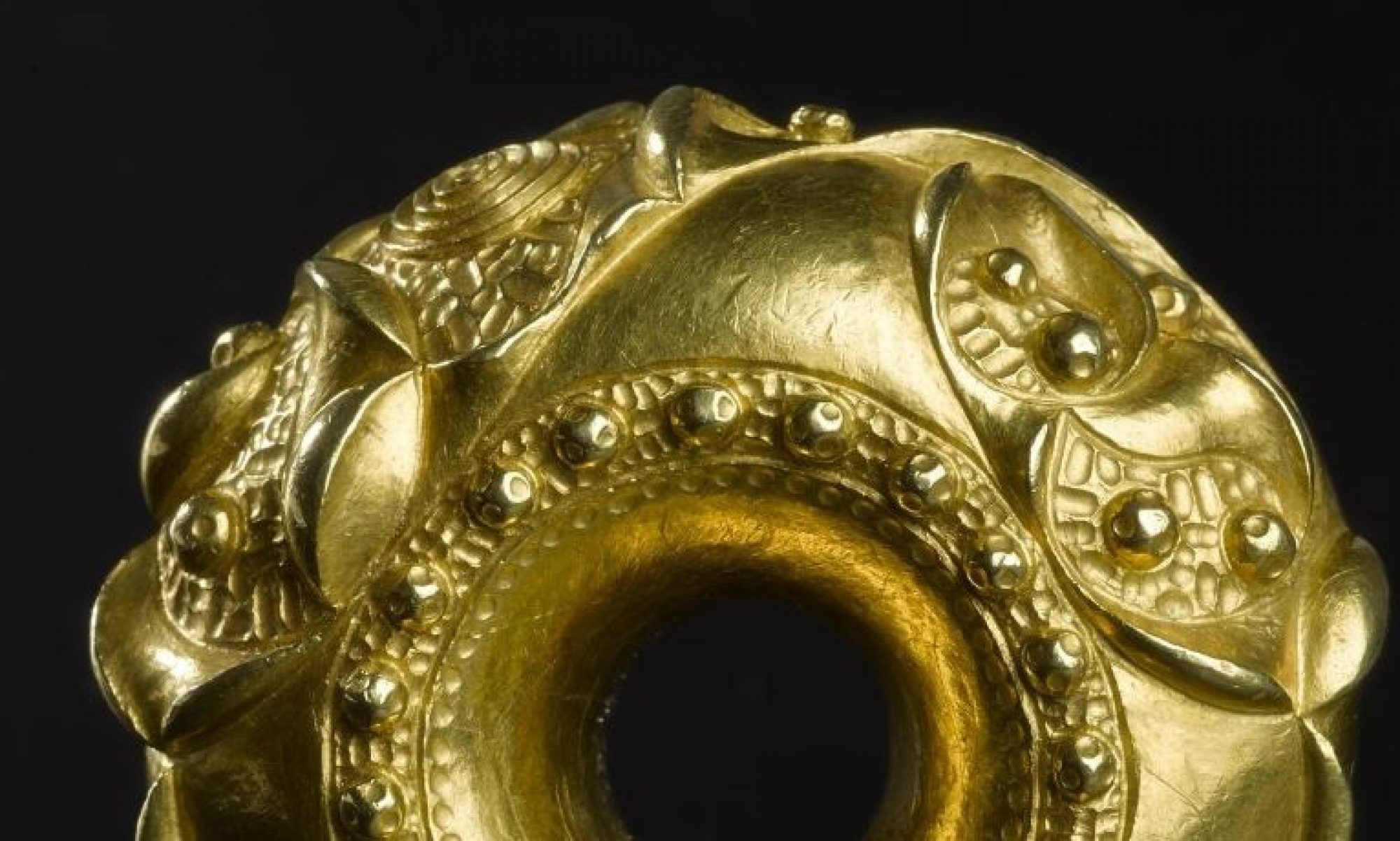

by Tess Machling
[A download/print PDF version can be found at the end of the paper]
This paper can be cited as: DOI 10.5281/zenodo.21860528
Abstract.
Previous work (Machling et al. 2023, Machling & Fregni 2024, Machling & Frieman 2024) has discussed the likely involvement of Harry Price in the fraudulent production/deposition of the Pulborough Area torc (Fig. 1) and other ‘archaeological’ finds. However, this research is contested by Adams et al. (2024) who believe the Pulborough torc to be a genuine example of Iron Age gold work.
This paper discusses further evidence that has recently come to light regarding a possible manufacturing method for the Pulborough Area torc, which references Harry Price’s love of engines and engineering and could explain the form and manufacturing techniques seen in the torc. Although not definitive, these findings add to the corpus of evidence that supports the suggestion that Harry Price was the creator, or instigated the creation of, the Pulborough Area torc.
Introduction.
The following is a short summary of the research carried out on the Pulborough Area torc to date. However, for a full account of the work so far, please see here.
The Pulborough Area torc was discovered by a metal detectorist in March 2019, subsequently declared Treasure and, in 2023, was acquired by Sussex Archaeological Society. The style of the torc is highly unusual and this torc has been explained by Machling et al. (2023) as a forgery or as a likely, foreign bought, planted object.
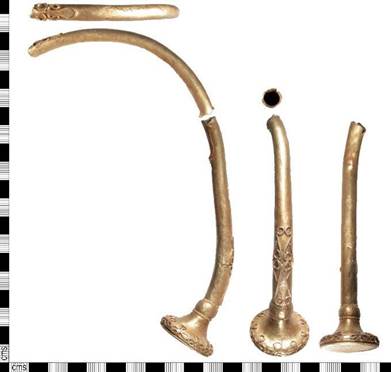
Figure 1: The Pulborough Area torc (Image ©Portable Antiquities Scheme)
In reply, Adams et al. (2024) believe the torc to be a rare, early, example of an imported continental torc. However, this interpretation does not explain the many links to renowned archaeological forger, Harry Price, who was known to be planting (and finding) both fraudulent copies (Machling et al. 2023, Machling & Fregni 2024), and genuine artefacts (Machling & Frieman 2024), close to his home in Pulborough, West Sussex in the early 20th century.
Harry Price, engineer.
From a young age, Harry liked engineering and was set on it as a career option (Price 1942, 15) before his father decided against it. Thwarted in his chosen career, Harry instead attended evening classes in electrical and mechanical engineering in London in his spare time. In his 1942 autobiography, Search for Truth, Harry often discusses his joy in making things and had at his disposal, first a workshop in his Pulborough home (Price 1942, 16) and, from 1926, a fully equipped workshop at the National Laboratory of Psychical Research in London (Fig. 2):
‘The workshop attached to the National Laboratory of Psychical Research contains every tool and gauge necessary for the construction and maintenance of scientific apparatus. Turning, brazing, casting, forging, grinding, polishing, etc., can all be carried on in the workshop by a competent person. Two lathes are installed. The larger, a 4½ in. screw-cutting model, with 6ft. gap bed, is capable of handling really heavy work. Sets of wood-turning and wood-carving tools are available, and the large lathe can be used for turning wood. The smaller lathe is for fine precision work. Every kind of screw can be made or duplicated by one of the many sets of stocks and dies, and stocks of all the principal screws are held. Metal, wood, various kinds of wires, plugs, adaptors, and other electrical equipment are housed in the workshop.
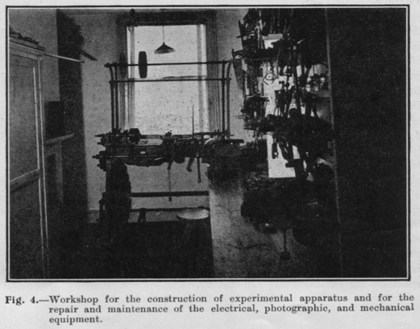
Figure 2: Harry’s workshop at the National Laboratory of Psychical Research in London (from Price 1926)
The fittings comprise a 7ft. by 3ft. by 2 in. bench, with a 4 in. Parkinson vice and two small vices. Over the bench are sets of shelves for the tools. Two cupboards contain sets and cases of gauges and tools and new material. Power for the large lathe is available, if necessary, and gas for the forge, brazing jet, soldering stove, etc., is laid on. The workshop is self -contained, and a person with the requisite skill could shut, himself up in this room and construct a complete scientific instrument.’ (Price 1926, 19).
The Pulborough torc shows a range of techniques used in its manufacture: possible casting, gold sheet manipulation, forming, soldering etc (Adams et al. 2024, Machling et al. 2024, Machling & Fregni 2024) and Harry’s workshop, and the tools within – a ‘forge, brazing jet, soldering stove’, etc – would have been more than sufficient to make a torc. With a possible source of Iron Age gold coins from his collection, ‘stolen’ in 1923, (for details of the theft, see Machling et al. 2023, Machling & Fregni 2024) Harry had the tools and materials needed to make the Pulborough Area torc. But if Harry did make the torc, how was it made?
Harry and engines.
Harry seems to have been fascinated with all things mechanical and engineering related. In his library (now held, with his archive, at Senate House library in London), there are numerous books on automation, mechanics and scientific ‘amusements’ – with many books detailing scientific methods which could be used to trick an audience, apparently as magic. Within Harry’s archive there are numerous gadgets – watchmaker’s tools, etc – and several photographs of engines (Harry Price Archive HPI/5/16, HPI/5/17 HPG/1/12/8).
As detailed in his autobiography, when he first saw a Rolls Royce, his thoughts were not about the car, but the engine: ‘I was first attracted to these cars when one stopped in front of our house … As one interested in mechanics and precision work, I was amazed at the beautiful workmanship … and I at once coveted, not the car, but the engine’ (Price 1942, 55).
In 1936, Harry bought his very own Rolls Royce: a 1931 model 20/25, second hand for £300 from Percy Perrin. Harry kept the car until his death in 1948. This car still exists and is used by the current owner, Edwyn Walsh, for weddings and events (Fig. 3).

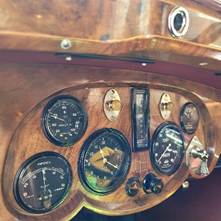

Figure 3: Harry’s 1931 20/25 Rolls Royce (Images © Edwyn Walsh)
A partner in crime? Eric Dingwall.
As detailed in a previous paper (Machling & Fregni 2024) the involvement of Dr Eric Dingwall – in the theft of Harry’s Iron Age coins from Pulborough – was suggested by Stella Cranshaw during a séance held in London, the day after the coins had been stolen in September 1923 (Price 1924, 360). [As an aside, this séance also featured a small, Pulborough torc shaped and sized, child’s trumpet (Fig. 4). Could this be another, typical Harry, breadcrumb trail of evidence?].
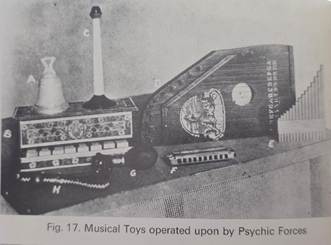

Figure 4: The small trumpet (at position C), used in the September 2023 séance with Stella Cranshaw (Images from Price 1942 & Turner 1973)
Dingwall, as well as being an anthropologist and married to archaeologist Doris Dunn, was very familiar with the British Museum, becoming Assistant Keeper of the Museum’s ‘Private case’ of erotica in 1947 (Josiffe 2013) and donating a number of items and bequests. As Gauld wrote in his obituary of Dingwall ‘the British Museum, in fact, seemed to be a kind of home from home for him’ (Gauld 1987, 231).
Like Harry, Dingwall also had an interest in all things mechanical and was described as having a ‘workshop wherein reposed a fine collection of tools, and enormous quantities of nails, screws, nuts, bolts and oddments, all stored by size or gauge in nests of labelled drawers’ (Gauld 1987, 232). Josiffe (2013) also notes Dingwall’s ‘collection of screws and scraps of metal, which he had first salvaged from rubbish bins near his flat in Cambridge, and then classified.’
The similar interests of Price and Dingwall – in history/archaeology, mechanics and making and the British Museum – taken with the Cranshaw séance accusation made against Dingwall only a day after the coin theft, provide a compelling suggestion that if Harry did fabricate the torc, and he had a co-conspirator, that might well have been Eric Dingwall.
Recent work.
In March 2026, the author became aware of a post on an online detecting forum, regarding a find of a poppet valve, which the finder thought to be that from a Rolls Royce Merlin aircraft engine (Fig. 5). The shape of the valve was remarkably similar to that of the Pulborough Area torc, although the size was too large. But it started off a train of thought – with Harry’s interest in mechanics and engines, could an object like this be related to the Pulborough Area torc?
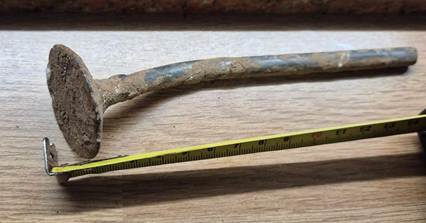

Figure 5: poppet valve (Image © Martin Turner, UK Meta Detecting)
Engine/poppet valves.
From the first development of the combustion engine in the 1860s, engine/poppet valves have been ‘the standard way of controlling the flow of the fuel/air mixture into the cylinder and the flow of exhaust gases out’ (Starr 2012, 283).
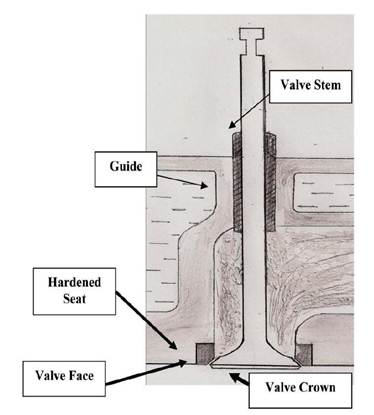
Figure 6: General arrangement of a poppet valve (From Starr 2012, 290)
Changing very little in their 150 years of use, these valves comprise a trumpet shaped head, on a rod stem (Fig. 6) which was fitted within an engine (Fig. 7), be that the engine of a motorbike, car, lorry, boat …or even an aeroplane, like the metal detected example (Fig. 5).
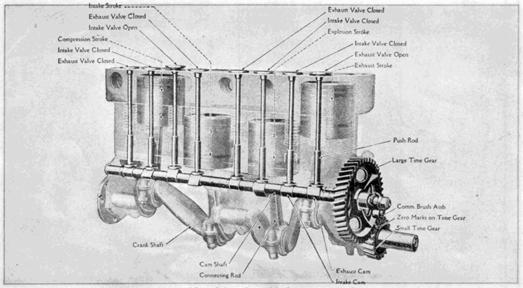
Figure 7: Cut through of a 1919 Model T Ford engine, showing intake and exhaust valves (Image © Ineuw, Wikimedia)
Valves vary in size depending on the engine they were fitted in, with head diameters of around 20-50mm and rod widths between 5-10mm.
In car engines of the late 19th/early 20th centuries, ‘the disc is about 25 mm across, which gently tapers into the valve stem. The valve stem is usually hollow to save weight, and is about 6–8 mm in diameter and about 80–120 mm long.’ (Starr 2012, 291). Often the face of a valve head was dished (Fig. 8).
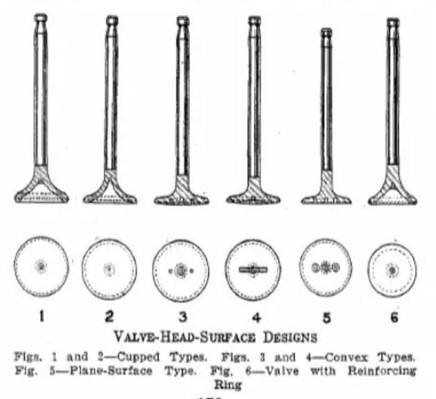
Figure 8: Valve head designs (From Bissell & Williams 1929, 179)
The Pulborough Area torc.
The dimensions for the Pulborough Area torc have been measured by Machling et al. and by Adams at al.:
‘The first piece measures c.118.2mm in length, with the terminal being c.28.7mm in diameter. The diameter of the neck ring on this piece is c.7.3mm. The thickness of the sheet at the broken end of the neck ring is 0.4mm. It weighs 39.68g. The second piece measures c.94.1mm in length, has a tube diameter of c.7.2mm and weighs 17.86g. The thickness of the tube neck ring sheet is 0.4mm.’ (Machling et al. 2023).
‘Part A is 118.2mm long. The diameter of the terminal is 28.7mm and the maximum external diameter of the neck-ring tube is 8.2mm. This piece weighs 39.68g. Part B is 94.1mm long. The maximum width of the neck-ring tube is 7.2mm and the weight is 17.86g, giving a combined total weight of 57.54g.’ (Adams et al. 2024, 3. Shape of the terminal).
Apart from a slight difference in the tube diameter for Part 1/A, and the tube thickness (Adams et al. believe the sheet to be 0.18-0.22mm thick, but this measurement was taken on a hammered thin sheet edge, rather than at the broken ends where the full tube sheet thickness of 0.4mm is visible) both sets of measurements are in agreement. Using Machling et al.’s measurement of the tube’s external diameter and thickness, the internal diameter of the Pulborough torc neck tube is approximately 6.4mm.
If compared to the measurement given by Starr (2012, 291) for later 19th/early 20th century engine valves, the similarity in dimensions is marked (Table 1):
| The Pulborough Area torc | Starr’s measurement of engine valves | |
| Length | Part 1/A: 118.2mm, Part 2/B: 94.1mm. | 80-120mm |
| Head diameter | 28.7mm. | ‘About 25mm’ |
| Rod/tube diameter | 7.2mm external. Machling et al.:6.4mm internal. Adams et al.: 6.76mm-6.84mm internal. | 6-8mm |
Table 1: Comparison of measurements between the Pulborough Area torc and standard engine valves.
When the valve dimensions are compared to other torcs of the Iron Age (Table 2) – and when examined alongside the form, decoration, alloys and manufacturing technique evidence (see Machling et al. 2023) shown in the Pulborough Area torc and other torcs – the differences are clear.
| Torc | Reference | Terminal face diameter | Neck ring diameter (external) |
| Starr valve measurement | (Starr 2012, 291) | ‘About 25mm’ | 6-8mm |
| Pulborough, UK | – | 28.7mm | 7.2mm |
| Clonmacnoise, Ireland | (Ireland 1992, 139) | 38mm | 8mm |
| Courtisols, France | BM ML.1711 | 35.5mm | c.9mm |
| Waldalgesheim, Germany | (Joachim 1995, 116) | 32mm | 5mm |
| Meung sur Loire, France | BM GR1867,0508.477 | 30mm | 10mm |
| Filottrano, Italy | (Hautenauve 2005, 260) | 25mm | 3.6mm |
| Leekfrith torc, UK | PAS WMID-FD08D9 | 21mm | 5.8mm |
| Shenstone, UK | PAS WMID-62A518 | 15.2mm | 6.1mm |
| Leekfrith bracelet, UK | PAS WMID-FD08D9 | 14.8mm | c.4mm |
| Heerlen, Netherlands | (Echt 2011, 33) | 13mm | 7mm |
| Caistor, UK | PAS NLM-605352 | 11.5mm | 4-4.5mm |
Table 2: The Starr valve and Pulborough Area torc dimensions compared to those of other European and UK torcs.
The construction of the Pulborough Area torc.
Although agreeing on dimensions, Machling et al. and Adams et al. disagree in several aspects of how the torc was put together.
Both Machling et al. and Adams et al. are in agreement that the neck tube was made from sheet gold alloy, seamed along the inside edge of the torc. Adams et al. included an illustration of how they believe the torc terminal to have been constructed (Fig. 9).
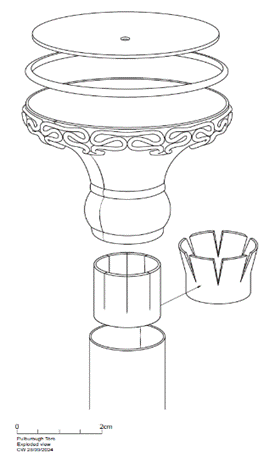
Figure 9: Expanded diagram of the components of the terminal. (Illustration by Craig Williams ©The Trustees of the British Museum).
Although in general agreement regarding the separately made terminal/collar and neck tube, and the internal support collet, Machling et al. felt that the terminal could be hollow cast, although the seam running along the exterior face of the terminal cone (see Figs. 9 & 10) was problematic for this interpretation.

Figure 10: The external face of the terminal, showing the crude seam or fault (Image © Tess Machling)
In addition, Machling et al. believed the face of the terminal to be created from a lipped ‘bottle cap’, whereas Adams et al. believe the terminal face to be a disc of material (Fig. 9). But in terms of how the piece was constructed – that is, a seamed sheet gold neck tube, with a seamed terminal and collar (supported by an internal collet) soldered onto it – there was general agreement between both groups of researchers.
Torcs and valves.
As previously suggested, the Pulborough Area torc dimensions closely match those of a later 19th century/early 20th century engine valve and this similarity is particularly noticeable when a valve is placed alongside the Pulborough torc (Fig. 11). Is there a reason for this similarity?

Figure 11: An engine valve (Bissell & Williams 1929) and the Pulborough Area torc, scaled to the same size.
The suggestion of this paper is that a valve was used as a mandrel or former (Fig. 11): the gold sheet wrapped around the rod to create the neck tube, and then the terminal made by hammering and soldering a piece of sheet gold over the trumpet-shaped valve head to form the terminal, before the mandrel was removed, and the torc was heated and bent to shape.
That valves can withstand considerable heat may also have made it a good choice as valves have to ‘resist physical and chemical actions of wide variety and varying magnitude’ (Bissell & Williams 1929, 179), often being exposed to heats of up to 900°C (Starr 2012, 292). The bubbling present on the terminal, previously thought by Machling et al. to be casting evidence, could be explained by the valve former retaining heat and effectively melting the gold while the torc maker attempted to inexpertly solder the seam (Giovanna Fregni pers. comm.).
A further reason for suspecting the involvement of engine/poppet valves in the manufacture, is the commonality of such items: in 1920s cars these valves would need constant adjustment and would be taken out for regrinding every 500 miles or so (Starr 2012, 293). They were also regularly changed out when they were worn. As Edwyn Walsh – now owner of Harry’s Rolls Royce and a restorer of early cars – said to me: ‘I have a lot of these valves!’. Harry, and Dingwall, would have known about these valves and would have adjusted them, or seen them adjusted and replaced, regularly.

Figure 12: The use of valves as formers and the possible way they were used to create the tube and terminal. (Image © Tess Machling).
It is also worth noting that, had a valve been used, this might explain the break in the torc neck tube: this area, at the end of the valve rod former’s reach into the neck tube, would have been more difficult to hammer over and would have likely created a weakness in the torc neck tube (Fig. 12). This finding also makes the likelihood that the torc was never made complete (as posited by Machling et al. 2023) more probable.

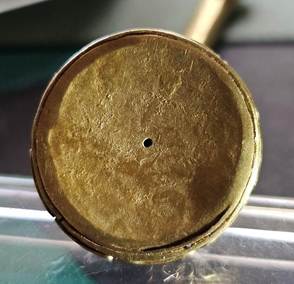
Figure 13: Inlet and exhaust valves and the Pulborough Area torc (Images © Edwyn Walsh and Tess Machling) .
For the face of the terminal, again a valve former would explain aspects visible on the Pulborough Area torc. Many formers were dished, and have a slight ledge running around the edge of the face of the head (Fig. 13, left).
This ‘ledge’ can also be seen on the Pulborough Area torc (Fig. 13, right), and is not a feature seen on any other buffer/thistle head torcs of this type. Had the terminal face been formed and pressed over a valve head, before being taken off and attached to the terminal, this similarity might be explained. However, the origins of the striations and intense wear on the terminal face are still unknown.
Dating.
We know that the Iron Age coins were stolen from St Mary’s church in Pulborough on 16th September 1923, while Harry was apparently in London. As has been shown previously (Machling et al. 2023, Machling & Fregni 2024), the coins stolen, those retained in Harry’s archive at Senate House and the corresponding weight of the Pulborough Area torc, make it possible that the torc was created from the ‘stolen’ Iron Age coins.
As such, if the torc was created in this way, then the likely date for the torc’s manufacture and planting, rests between September 1923 and Harry’s death in March 1948. Although it is impossible to narrow down a shorter timescale, the period fits well with the earlier 20th century valves described by Starr (2012) and Bissell & Williams (1929) and my feeling is that, had Harry made and/or planted the torc, it was likely to have been in the earlier period, closer to his archaeological phase, rather than later in his life.
Valve type.
Although we cannot be sure of the precise type of engine that the valve came from, we can narrow it down slightly. The valve is too small to have come from an aeroplane engine, and is also too small for Harry’s Rolls Royce 20/25 (inlet and exhaust valves for these cars are around 40mm head diameter, and 9mm stem) (Fig. 14). It is likely that the valve came from a smaller car, or even a motorbike.
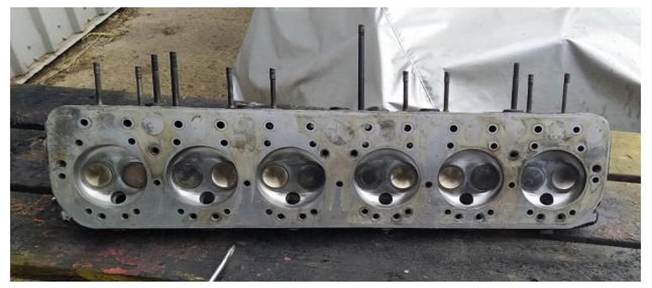
Figure 14: Inlet and exhaust valves fitted in a 20/25 cylinder head (Image © Hamish McNaught)
Edwyn Walsh kindly sent me two valves: one from a pre-war Austin 7 and another from a post war Ford 1500, pre-crossflow engine (Fig. 15):
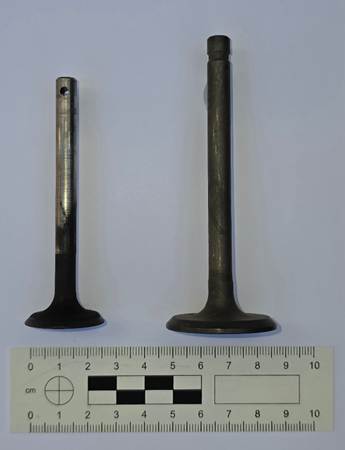
Figure 15: Valves from an Austin 7 (left) and Ford 1500 pre-crossflow (right) (Image © Tess Machling)
The Ford valve is far too big, and the wrong shape, for the torc but the Austin 7 valve – with a 26.3mm diameter valve head, 6.7mm stem diameter and a 82.6mm rod length – would be a good candidate.
Between 1922 and 1939 (when the model ended production) over 290,000 Austin 7s were made in the UK. These car engines would need to be decoked – have the carbon build-up removed – and have the valves checked every 4000 miles or so (Edwyn Walsh pers. comm.). As such, there would have been a large number of Austin 7 valves in circulation at the time between 1923 and 1948 when the torc fraud is likely to have taken place and would have almost certainly been familiar to engine-obsessed Harry.
Summary.
We will never know for sure whether Harry Price – with or without help – made and/or planted the Pulborough Area torc, but this paper adds to the mounting circumstantial evidence (Machling et al. 2023, Machling & Fregni 2024, Machling & Frieman 2024) that he did.
When taken in conjunction with other evidence of,
- the ‘sacred grove’ findspot being close to his home, and within 500m of other faked finds (the rune covered bone fragment and ‘silver’ ingot);
- its unusual findspot in South East England, away from other torc finds;
- the Pulborough torc alloy composition, form and construction techniques which do not match those of other torcs of the period;
- the weight of the torc and its correspondence with the number of stolen Iron Age coins;
- the similarity of the applied decoration to late 19th/early 20th century ‘Revival’ designs and techniques;
- the poor quality of the torc manufacture;
- the unusual wear pattern on the face of the torc terminal;
- the similarity to known fakes/replica torcs of the early 20th century;
- Harry’s fakery of the statuette, inscribed bone, and ingot;
- his planting of the Springhead Clump dagger;
- Harry and Dingwall’s well equipped workshops and interest in archaeology;
- Harry’s interest in engines;
- …and now the possibility that Harry used an engine valve as a former to create the torc,
it becomes increasingly difficult to say that the Pulborough Area torc ‘can be added to a small but growing group of mid- to late first millennium BCE gold items of personal adornment found in England’ (Adams et al. 2024, 7. Conclusion).
We will never know for sure how the Pulborough Area torc got to where it was found in March 2019. However, the balance of probability is that, in some way or another, Harry Price – forger, fraudster, ghost hunter and psychic investigator – was involved.
————————————————–
Tales of the Unexpected: A tall torque story.
Once upon a time, in the early 20th century, Harry Price lived in the small village of Pulborough in West Sussex. Having basked in the societal glow of a number of spectacular archaeological finds, Harry’s meteoric antiquarian rise had somewhat faltered after his exposure by the Society of Antiquaries fellows, who had publicly – cruelly – dismissed his silver Roman ingot as a fraud. His pride dented, he had continued to give low key talks about castles to those, usually out of area, who would care to listen, but his heart was no longer really inspired by archaeology.
No matter, as on so many other occasions, it was time for Harry to shift focus to something new: combining his great skill and understanding of magic and mechanics, a career in psychic investigation – ghost-hunting – beckoned.
But what to do with all those finds of old and the huge coin collection? Was there a chance of one last trick on the antiquarian world who had so wronged and humiliated him? Charles Dawson had been up to this game for years and no-one had spotted him. Dawson would have nothing on this. He’d show them.
What if the coins could be used to make the ultimate artefact? One of those stunning gold torques he had seen in the British Museum and the Louvre? Made in ancient gold, how would they ever know? Ding and Stella thought it was a great idea, even if Stella had almost given the game away.
How to do it? Well, he had the tools and the workshop, and now, the gold. Ding and he had always laughed about how much exhaust valves looked like torque terminals, like those ones from Marne with the funny train-buffer shaped ends. He could use that as a former – after all, how difficult could it be?
Oh my! It was a lot trickier than it first looked: wrapping the sheet was fine, but when it came to closing the joins, especially on the terminal, that was tough: the gold bubbled and looked messy, the solder flooded the wires, and there wasn’t enough gold to make the whole thing.
But it would do.
Everyone knew the ancient Britons weren’t as advanced as we are and that torque in the British Museum from Belgium – and indeed the Irish one he’d seen in the newspaper years ago – were broken so that wouldn’t seem so strange.
Now he had to find the perfect place to hide the torque, where it could be miraculously found during one of his dog walks. He knew just the spot, next to the footpath, where there were majestic oaks and a small spring: the perfect Celtic Druid grove. If he made sure someone was with him when he ‘found’ the torque, so much the better. But, he’d been careless with the statuette and Connie’s brother had never quite believed him, so this time he wouldn’t palm it – he’d go down there later and place it, ready for tomorrow. Baggallay was coming over, so it would be the perfect excuse to go for a stroll after lunch.
What a splendid wheeze, he thought, I wonder if they’ll ever work out what I’ve done…
————————————————–
Acknowledgements
My thanks, as always, go to Team Mongoose: Giovanna Fregni, Cat Rees, Kayt Hawkins, Lisa Brown, Duncan Mackay, Joseph Bhart and all those who have read, commented or just generally kept me going during the madness that is researching Harry Price.
I would also like to thank Edwyn Walsh for fabulous chats about Harry’s Roller, the valves and for narrowing down the likely engine type. Also thanks to Edwyn, Joseph and Matt Bunker for not allowing me to make a fool of myself regarding engines! As ever, all errors or omissions are entirely mine alone.
References
Adams, S., Craddock, P., Hook, D., La Niece, S., Meeks, N., O’Flynn, D. and Perucchetti, L. 2024. The Pulborough Gold Torc: a 4th to 3rd century BCE artefact of European significance, Internet Archaeology 67. https://doi.org/10.11141/ia.67.16
Bissell, R.E. & Williams, G.T. 1929. Poppet Exhaust Valve Design, Journal of the Society of Automotive Engineers, xxv.2, 142–47.
Echt, R., Marx, M., Megaw, V., Thiele, W.-R., Van Impe, L. and Verhart, L. 2011. An Iron Age gold torc from Heerlen (prov. Limburg/NL). Archäologisches Korrespondenzblatt. 31. 31-49
Gauld, A. 1987. Recollections of E.J. Dingwall. Journal of the Society for Psychical Research 54 (no.808): 230-237.
Hautenauve, H. 2005. Les Torcs D’Or du Second Âge du Fer en Europe: techniques, typologie et symbolique. Rennes: Association du Travaux du Laboratoire d’Anthropologie de l’Université de Rennes 1
Ireland, A. 1992. The Finding of the ‘Clonmacnoise’ Gold Torcs. Proceedings of the Royal Irish Academy, 92C, 4, 123-146.
Joachim, H-E. 1995. Waldalgesheim: Das Grab einer keltischen Furstin (Kataloge des Rheinischen Landesmuseums Bonn) Rheinland-Verlag in Kommission bei R. Habelt.
Josiffe, C. 2013. Dr Dingwall’s Casebook. pts. 1 & 2. Fortean Times (April & May 2013, nos. 299 & 300), 44-49 & 50-54.
Machling, T. & Fregni, G. 2024. Fake or fortunate? The insecure provenance of the ‘Pulborough Area’ torc. Blog. DOI 10.5281/zenodo.13911434
Machling, T. & Frieman, C. 2024. The Springhead Clump lanceolate flint dagger from Parham, Sussex: a genuine find or a planted object? PAST: The Newsletter of the Prehistoric Society 107 (Summer 2024), 12–14.
Machling, T., Williamson, R. & Fregni, G. 2023. ‘All the right notes, but not necessarily in the right order’: The riddle of the ‘Pulborough Area’ torc from Sussex. Blog. DOI 10.5281/zenodo.10511405
Price, H. 1924. Stella C – A Record of Thirteen Sittings for Thermo-Psychic and Other Experiments. Journal of the American Society for Psychical Research. 8, 5. 305-362.
Price, H. 1926. A modern psychic laboratory. The British Journal of Psychical Research, 1,1. 10-19.
Price, H. 1942. Search for Truth: My Life for Psychical Research. Collins, London.
Starr, F. 2012. Development of the Poppet Type Exhaust Valve in the Internal Combustion Engine: Part I 1860–1930, The International Journal for the History of Engineering & Technology, 82:2, 283-314.
Turner, J. 1973. Stella C. An account of some original experiments in psychical research. London: Souvenir Press.
(If you’d like to support my work as an unfunded independent researcher, then please buy me a ‘coffee’. Thank you 🙂 )

